



Traditional game
Chess
The two-player battle of wits that began in India as chaturanga
- 2best with 2
- 10–60 minper game
- About 2 minto set up
- 5+years
- Medium
- Nonereading
A well-made set, on Amazon.in
Many brands make this game. We picked one well-made set; check its size and pieces in the listing before you buy.
Paid link. We may earn a commission, at no extra cost to you.
The game in a nutshell
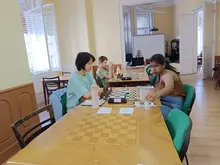
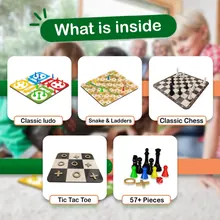
Chess is the two-player strategy game that grew out of chaturanga, played in India by the 6th or 7th century. There's no luck at all: you take turns moving one piece and try to trap your opponent's king. Children can learn the moves from about 5, and it's a game a family can grow into for years. The set we link is a combination set: Clapjoy's made-in-India wooden 4-in-1 board with chess, Ludo, Snakes & Ladders and Tic Tac Toe.
Is Chess right for you?
Great if
- Two players who enjoy a quiet battle of wits: parent and child, grandparent and grandchild, or cousins in the school holidays
- Children from about 5 or 6 who are ready to learn the rules one piece at a time
- Families who want one box with chess for two and Ludo or Snakes & Ladders for everyone else
- Children inspired by Anand and Gukesh who want to start at home before joining a school or club chess class
Skip it if
- You want a game for the whole group: chess is strictly for two
- Your young child hates losing: there's no luck to even things out, so a stronger player has to go easy
- You want a club or tournament-size set: this combination board is only 12 x 12 inches, so the pieces are small too
How Chess plays
Set-up: place the board so each player has a light square in the right-hand corner ('light on right'). The rooks go in the corners, then the knights, then the bishops. The queen goes on the square of her own colour and the king beside her, and the eight pawns stand in the row in front. White always moves first, and then you take turns, one move each.
- Time to teach: about 30 minutes for the moves; years to master.
- Reading and language: Nothing to read: the pieces are told apart by shape. Rules and lessons are easy to find in Hindi and other Indian languages, including a Hindi version of Chess.com's beginner guide, so grandparents and children can learn in whichever language they're most comfortable with.

How to Play Chess · Triple S Games
Choose a video · Watch right here
If this creator doesn’t allow embedded playback, watch on YouTube ↗.
Your turn, step by step
- 1Move
On your turn, move one of your pieces according to how it moves. White goes first, then you take turns.
- 2Capture
Move onto a square held by an enemy piece to take it off the board. Pawns capture diagonally.
- 3Check
If you attack the enemy king, it's 'check', and your opponent must get the king out of danger straight away.
- 4Win
Checkmate wins: the king is in check and has no escape. If the player to move has no legal move but isn't in check, it's a draw.
The full explanation: how a game of Chess goes
How the pieces move: the king goes one square in any direction. The queen moves any distance in a straight line or along a diagonal, the rook along rows and columns, and the bishop along diagonals. The knight jumps in an L shape (two squares one way, then one to the side) and is the only piece that can jump over others. Pawns move one square forward, or two on their first move, but capture one square diagonally forward. You capture by moving onto the square of an enemy piece and taking it off the board.
Special moves and winning: once the basics feel easy, add castling (the king and a rook move together to tuck the king away), promotion (a pawn that reaches the far side becomes a queen, rook, bishop or knight, almost always a queen) and en passant (a special pawn capture). When a king is attacked it is in 'check' and must escape at once. If it can't, that's checkmate and the game is over. If the player to move has no legal move but isn't in check, it's stalemate, which is a draw.
How families learn: go one step at a time. First learn how each piece moves, then play short mini-games such as pawns only (first pawn to the far side wins), then learn simple endings like king and queen against a lone king. Older relatives may remember 'desi' rules played in India in the 18th and 19th centuries, such as no two-square first move for pawns and a once-a-game knight jump for the king instead of castling, so agree on the rules before you start. FIDE's Laws of Chess are the international standard.
How long it takes: a game between beginners usually lasts 10 to 30 minutes, and between keen players an hour or more. Clubs and tournaments use clocks: in rapid chess each player has more than 10 but less than 60 minutes for the whole game, and in blitz 10 minutes or less.
What's in the box
- 32Chess pieces
16 light and 16 dark: a king, a queen, two rooks, two bishops, two knights and eight pawns each. Clapjoy doesn't say what they're made of or how tall they are. - –Double-sided wooden boards
12 x 12 inches; between them they carry chess, Ludo, Snakes & Ladders and Tic Tac Toe - –Ludo and Snakes & Ladders tokens
count not listed - –Dice
for Ludo and Snakes & Ladders; count not listed - –Tic Tac Toe pieces
count not listed - 1Wooden storage box
shown among Clapjoy's product images; not described in text
Box: 30.5 × 30.5 cm, 0.9 kg. Handy to know for gifting and travel.
Clapjoy's product page shows only photos, with no written contents list, so this list is put together from the product name, the listing title (12 x 12 inch) and Clapjoy's description of the same Classic 4 set in a combo pack ('two double-sided boards'). Any chess set has 32 pieces. Check the counts when you open the box, and note that other 4-in-1 sets from other brands may pair the games differently.
Where to buy
A well-made set, on Amazon.in
Many brands make this game. We picked one well-made set; check its size and pieces in the listing before you buy.
Opens Amazon.in in a new tab.
Chess has no original box to import: dozens of Indian and foreign brands make sets, so buy for quality rather than origin. For a family's first board, a made-in-India wooden set with an ISI mark is the sensible choice, and that's where our Amazon.in button goes: Clapjoy's wooden 4-in-1 combination set, which Clapjoy says is made in India and BIS certified. When a child gets serious, add a club-size set (see below) rather than an expensive import.
How to pick a good setWhat to check in the listing before you buy.
- Board size against piece size: FIDE's rule of thumb is that four pawns should fit comfortably on one square, and a tournament king of 9.5 cm sits on squares of 5 to 6 cm. A 12-inch combination board has squares of about 3.5 cm or less, so its pieces are small: fine for children and travel, cramped for adult hands.
- Pieces: look for the classic Staunton shapes (a cross on the king, a crown on the queen, a slit in the bishop's head, a horse's head for the knight) so children can tell them apart, with clearly light and dark sides. Weighted pieces with felt bases don't tip over at every touch.
- Material and finish: smooth, sanded wood with no rough edges, paint that doesn't chip, and a matte rather than glossy board so lights don't glare. On a double-sided board, check that the squares are printed straight and evenly on both sides.
- Piece count: a full set has 32 pieces, 16 per side (a king, a queen, two rooks, two bishops, two knights and eight pawns). Some sets add a spare queen for each side for pawn promotion.
- Safety: toys sold in India must carry the ISI mark under a BIS licence. Look for the mark and a licence number starting CM/L on the box, especially for a set meant for young children.
- Storage: a box with compartments, or a folding board that holds the pieces, keeps all 32 together. A lost pawn is easily replaced, but a lost king ends the game; magnetic sets suit travel.
- When a child starts playing at school or club level, move up to a club set: a roll-up vinyl board with about 2.25-inch squares and weighted Staunton pieces with a king of about 3.75 inches (9.5 cm).
We link to one well-made set from a maker we could identify; other good sets exist. We don't show prices: Amazon shows today's price, the seller and delivery. Paid link. We may earn a commission, at no extra cost to you.
What reviewers and players say
Chess is the classic thinking game, and its fans love that skill decides everything: no luck, and no two games alike. On chess forums, parents advise building a love of the game first, with short checkmate puzzles and friendly games, rather than drilling rules. The usual complaints are that beginners lose again and again to stronger players, which can upset young children, and that games between careful players can run long. On equipment, players like pieces that are easy to tell apart and steady enough not to tip at a touch, which small, light combination sets don't always manage.
What people love
- Pure skill: there are no dice or cards, so every improvement feels earned
- Endless variety, from five-minute blitz games to long, thoughtful ones
- A shared hobby across generations, from grandparents to young children
- Easy to start: any board and pieces will do, and free lessons and puzzles are everywhere
Common complaints
- Beginners lose over and over to stronger players, which can put young children off
- Games can run long when both players think hard
- Light, unweighted pieces on small boards get knocked over easily, especially by young players
Based on 6 reviews and discussions
- Players Teaching chess to kids. (baronspam, May 2010) · Chess.com forums
- Players Why heavy pieces? (hermanjohnell, September 2026) · Chess.com forums
- Reference Chess for Absolute Beginners (GM Priyadharshan Kannappan, October 2025) · Lichess blog
- Reference How to Play Chess: rules and 7 first steps (Chess.com, undated) · Chess.com
- Reference Masters of the Knight: The Art of Chess Carving in India (Roxanne Hoorn, January 2025) · Atlas Obscura
- Video How To Play Chess: The Ultimate Beginner Guide (GothamChess, date not checked) · YouTube - GothamChess
Summarised in our own words from the sources above. We don't use Amazon reviews or ratings.
More like Chess
Our picks if Chess isn't quite right
| Feature |
 Chess
Chess |
 Othello
 |
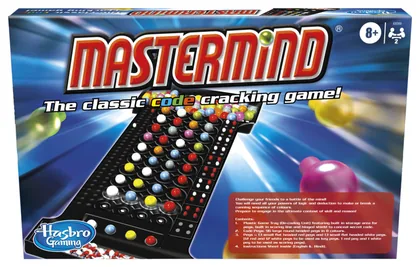 Mastermind
 |
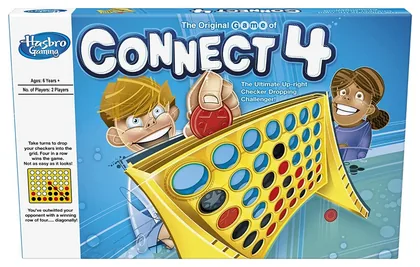 Connect 4
 |
|---|---|---|---|---|
| Players | 2 | 2 | 2 | 2 |
| Best with | 2 | 2 | 2 | 2 |
| Play time | 10–60 min | 15–30 min | 10–30 min | 5–15 min |
| Age | 5+ | 8+ | 8+ | 6+ |
| Rules | Medium | Easy | Easy | Easy |
| Indian edition | Yes | Yes | Yes | Yes |
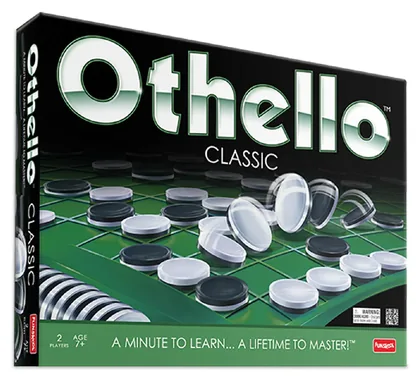
| Why look at it | This page | Another pure-skill two-player board game, with rules you can learn in a minute | A quiet two-player logic game for children who like thinking ahead | A first strategy game for younger children: plan ahead and block your opponent |
More from Clapjoy
More pure strategy games
See all
Blokus
Fit your pieces on the board, corners only, and box others out
Connect 4
Drop discs, block your rival and get four in a row
Othello
Trap a line of discs, flip them to your colour
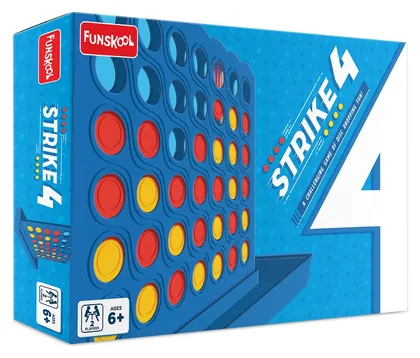
Strike 4
Drop discs, block your rival and line up four first
Tic Tac Toe
Three in a row wins: every child's first strategy game
Questions people ask about Chess
Did chess come from India?
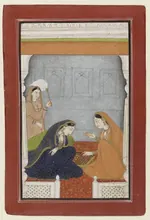
Yes. Chess grew out of chaturanga, a game played in north India by around the 6th or 7th century; its name refers to the four divisions of an ancient Indian army: infantry, cavalry, elephants and chariots. It spread to Persia as chatrang, later called shatranj, and from there to Europe, where it slowly became the modern game.
What is the best age for a child to start chess?
Most children can learn the moves from about 5 or 6, and Clapjoy rates this set for 5 and up. Start with how each piece moves, play short pawn-only games, then learn simple checkmates. Keep games short and fun at first.
How long does a game of chess take?
A casual game between beginners usually takes 10 to 30 minutes; keen players can take an hour or more. With a clock, rapid chess gives each player more than 10 but less than 60 minutes, and blitz 10 minutes or less.
What size chess set is used in tournaments?
FIDE's standard is a king about 9.5 cm tall on squares of 5 to 6 cm. Club and school events usually use a roll-up vinyl board with squares of about 2.25 inches (5.7 cm) and weighted plastic Staunton pieces. A small combination set like this one is for home and travel.
Who are India's world chess champions?
Viswanathan Anand became India's first grandmaster in 1988 and was world champion in 2000 and again from 2007 to 2013. D Gukesh of Chennai became world champion in December 2024, aged 18, by beating Ding Liren in Singapore. India also won both the open and women's golds at the 2024 Chess Olympiad in Budapest.
Game facts
- Publisher
- Clapjoy
- Players
- 2
- Language
- No reading – Nothing to read: the pieces are told apart by shape. Rules and lessons are easy to find in Hindi and other Indian languages, including a Hindi version of Chess.com's beginner guide, so grandparents and children can learn in whichever language they're most comfortable with.
- Box size and weight
- 30.5 × 30.5 cm, 0.9 kg
Sources & photo creditsThe references behind this guide.
Facts on this page come from the publisher, the Indian maker or distributor, and the sources below. Photos are credited under each one.
- Clapjoy - Wooden Classic 4-in-1 Board Game Set (Chess, Ludo, Snakes & Ladders, Tic Tac Toe)
- FIDE Handbook - Laws of Chess (from 1 January 2023)
- FIDE Handbook - Chess Equipment without Electronic Components (from 1 March 2026)
- Chaturanga - Wikipedia
- Chess in India - Wikipedia
- Indian chess - Wikipedia
- Masters of the Knight: The Art of Chess Carving in India (Atlas Obscura, January 2025)
- Bureau of Indian Standards - Indian Standards on toys (Toys QCO, ISI mark)
- Chess.com - How to play chess (Hindi)
- DOMS buys 30% stake in Delhi-based toy maker Clap Joy (MergersIndia, March 2023)