
Two-player board games in India
Two seats.Plenty to play for.
A quick duel, a quiet puzzle or one shared problem to solve. These board games work for exactly two—whether you’re a couple, friends or siblings claiming the table after dinner.
Find your kind of evening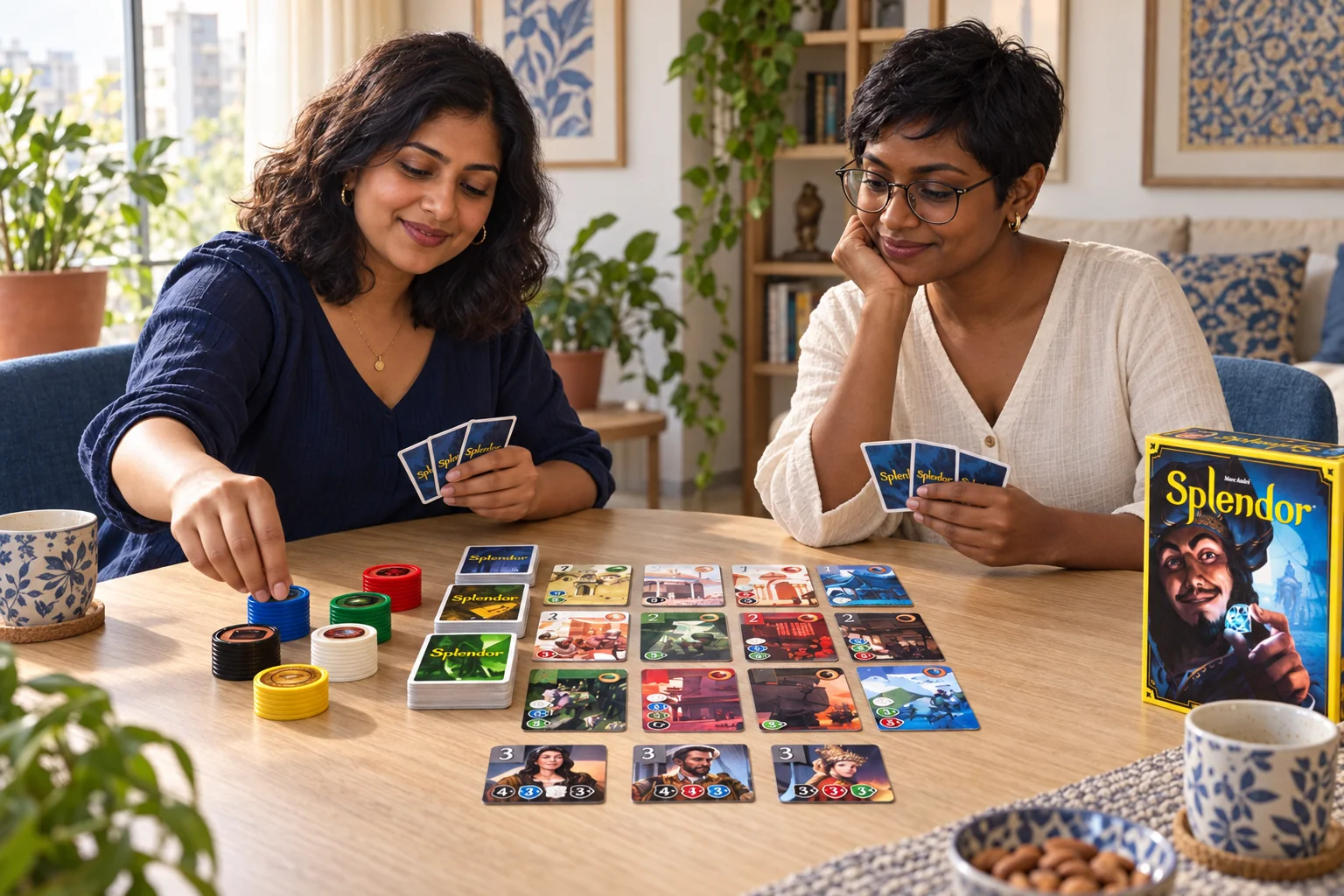
The short answer
First choose the kind of rivalry.
For a dedicated two-player contest, start with Jaipur. For a visual puzzle with a competitive edge, try Azul. Splendor lets the same box welcome more players later. If you would rather win or lose together, consider Pandemic.
A friendly duel
A game designed around just the two of you.
A little quiet plotting
Your own plan, with one eye on theirs.
On the same side
One board. One shared win—or loss.
The boardgames.in shortlist
Two players. Four different evenings.
“Supports two” and “made for two” are different things. Here is what each choice brings to the table.

Trade goods in a shared market and decide when to sell. We would choose Jaipur for two people who want a proper contest without committing a whole evening. Taking something useful can also leave something useful behind.
Reading: Goods are pictured; learn the exchange and scoring rules together.
It is competitive throughout. A complete match uses a best-of-three-round structure, so leave room for the rematch within the match.

Draft coloured tiles to build a patterned wall. We would choose it for people who like visual decisions and enjoy paying attention to what an opponent needs. It can be calm in tone while still being quite pointed.
Reading: No reading on tiles; someone needs to understand the scoring.
Unwanted tiles bring penalties. “Pretty” does not mean forgiving, and one player can deliberately leave the other awkward choices.
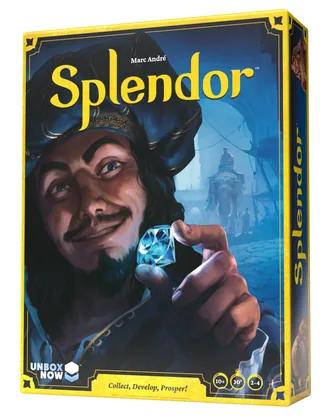
Collect gems and buy cards that make future purchases easier. Choose this if you enjoy improving a plan over successive turns and also want to use the box when friends visit.
Reading: Mostly colours, symbols and numbers during play.
There is competition for the same cards. More experienced players may spot efficient combinations much sooner.
Check the edition
This recommendation is for the original Splendor. Splendor Duel is a separate game, not a two-player mode in this box.
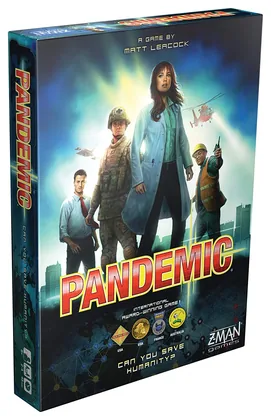
Coordinate your roles to discover cures before the board overwhelms you. We would choose Pandemic when conversation and a shared plan sound more appealing than beating each other.
Reading: City names and some card text; discuss and read aloud as needed.
It asks more of a first teach than Jaipur. Agree that each player owns their turn, so one confident player does not make every decision.
No matches in this shortlist.
Try “Any style” or reset the filters. We would rather show fewer choices than recommend a game above the selected age.
Player counts, starting ages and times refer to the editions in our catalogue; timings are not first-session estimates. Fit and watch-out notes are our editorial judgement. Product photographs and source credits are on each game page.
A little know-how
A good date-night game leaves room for both of you.
Agree on the mood
A cooperative game and a gentle-looking competitive one can feel very different. Pick together before the box is on the table.
Make the first round a welcome
Explain the goal and a normal turn, then demonstrate the choices. Offer help without announcing the “correct” move every time.
Leave room for learning
Set aside more than the listed play time for your first session. Choose a shorter game if the evening already has a hard stop.
A quiet game can still be a direct contest.
Azul and Splendor do not need shouting or negotiation to create tension. At two, you can pay close attention to the one person taking the pieces or cards you want. If that sounds fun, good. If it sounds tiring after a long day, choose something cooperative instead.
Jaipur gives you a dedicated two-player structure. The other three recommendations also support larger groups, but that flexibility should be a bonus—not the sole reason to choose a game for two.
For couples with different levels of experience.
Start with a game neither person knows well, or play an openly taught first session. Discuss what makes a move useful without turning the evening into a lesson with a score attached. This is a suggestion for your table, not a change to the official rules.
With Pandemic, ask before offering advice. A shared victory is more satisfying when both players helped shape it. If either person dislikes the disease theme, choose another theme rather than trying to sell them on the mechanics.
Before you roll
A few good questions.
What is a good first board game for a couple?
Jaipur is our dedicated two-player starting point if both people want a competitive game. Choose Azul for a visual puzzle or Pandemic for a shared challenge. The best fit depends more on your preferred mood than your relationship.
Can two people play Catan?
The standard Catan base game is designed for three or four. Do not buy that box expecting the normal two-player experience. Jaipur is designed for exactly two; the other games in this guide have official two-player support.
Is Splendor the same as Splendor Duel?
No. They are separate games with different rules and components. This guide links to original Splendor, which supports two to four players.
Do I need Codenames Duet for two players?
Codenames Duet is a distinct cooperative game. Standard Codenames has special small-group rules in some editions, but its main team experience is different. Do not substitute one edition’s recommendation for the other’s listing.
Behind the shortlist
A little homework. A clearer choice.
Researched on 14 October 2026 using publisher pages, official rules and our edition-specific catalogue. Recommendations are editorial judgements, not claims of hands-on testing. We considered the decisions a player makes, reading demands, group size and the reasons a game may not fit. Inclusion does not imply current availability in India.
Open the source shelf
Our game pages link further edition evidence. Where editions differ, use the actual box and rulebook as the final reference.