
Board games for families in India
Good company.Great games.
The best family board game is the one everyone wants another turn at. Start with your people: their ages, their language comfort and the sort of evening you have in mind.
Find your family’s fit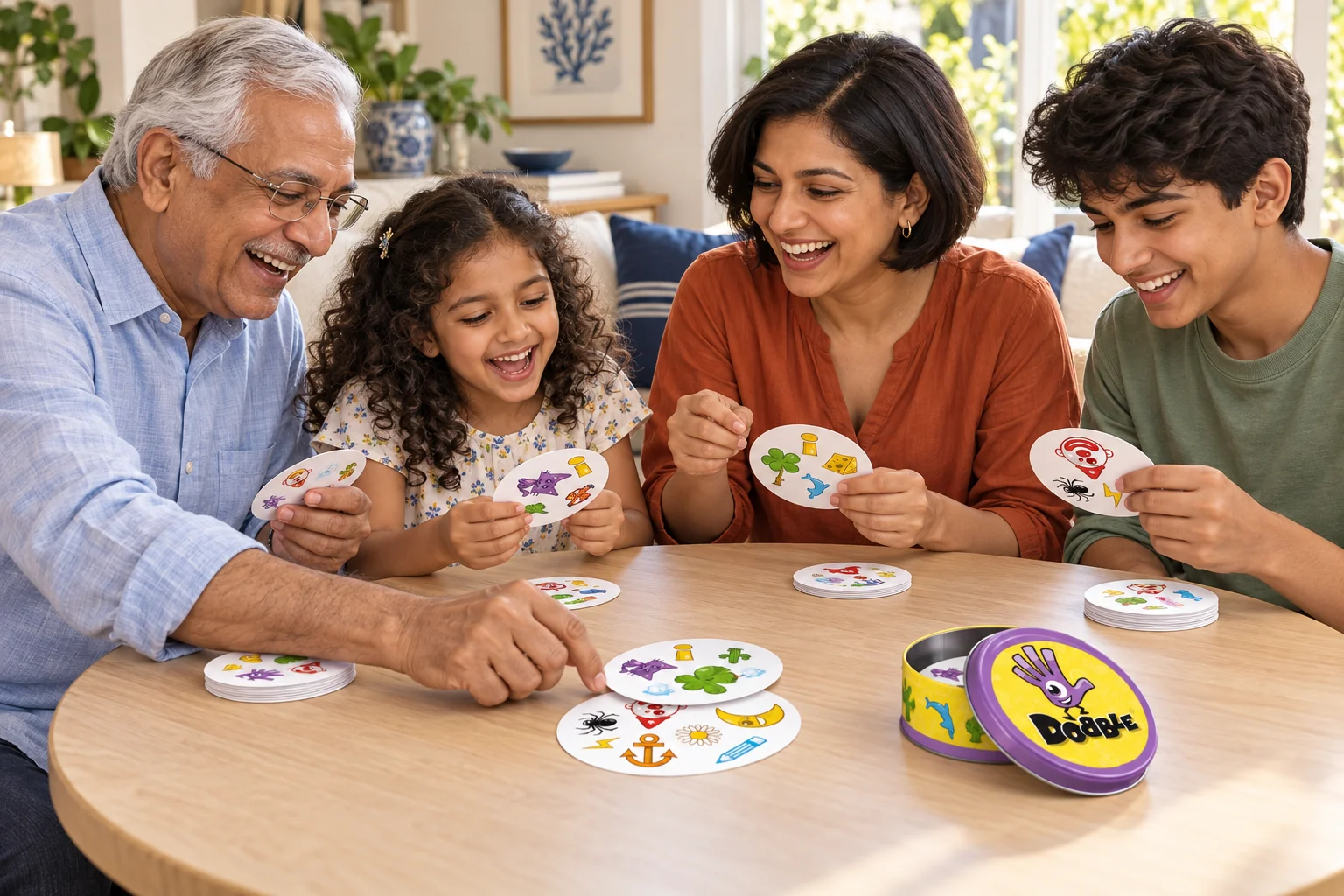
The short answer
One family. Several kinds of game night.
For a quick burst of energy, start with Dobble. For a settled evening around a board, consider Ticket to Ride. For a smaller table that likes quiet decisions, try Kingdomino. None is a universal winner: the right choice changes with the youngest player and the mood of the room.
People coming and going
Short rounds, a quick explanation and an easy moment to join.
Everyone settling in
A shared board and time to see your plans through.
A quieter little table
Less shouting. More “I was going to take that.”
The boardgames.in shortlist
A seat for everyone. A reason for each pick.
Five different invitations to play. Choose the mood before you choose the box.
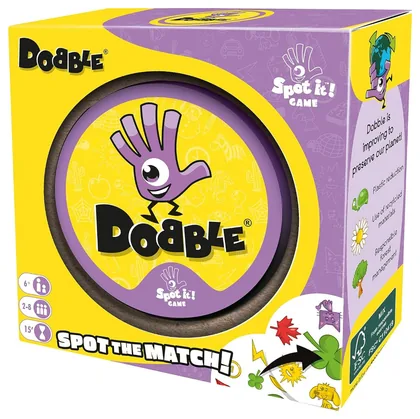
Spot the matching picture before someone else does. We would reach for this when you want to get playing quickly, with minimal reading and plenty of noise. Join a fresh mini-game between rounds rather than interrupting one in progress.
Reading: Pictures; agree on names in any shared language.
Fast eyes have an advantage. A wide gap in speed or confidence can leave someone on the sidelines.
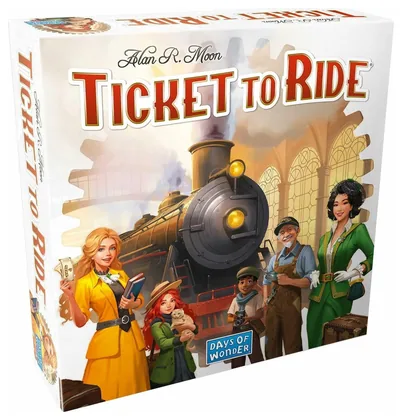
Collect train cards and connect destinations on a map. This is our starting point for a family ready to stay with one game rather than dip in and out. The visible routes give everyone something concrete to plan.
Reading: City names on tickets; most choices use colours and pictures.
Routes can be blocked. Allow time for the first explanation and make sure everyone can stay to the end.
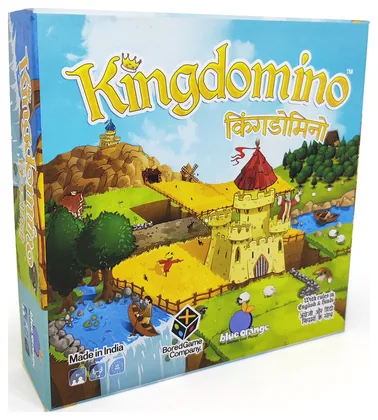
Choose landscape tiles and build your own little kingdom. We like this direction for a family that wants a compact puzzle with a clear finish, without constant negotiation.
Reading: No reading on landscape tiles; help may be needed with scoring.
Scoring needs counting and multiplication. An adult can help calculate without choosing a child’s tiles for them.
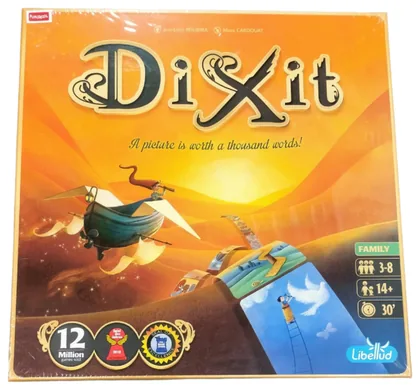
Give a clue to a dreamlike picture and see who follows your train of thought. Choose it when the pleasure is in the conversation and surprising associations, rather than finding one objectively correct answer.
Reading: Picture cards; clues can use a language everyone shares.
Inventing a clue can feel more difficult than taking a normal turn. Some younger or shy players may prefer a more concrete game.
Check the edition
The refreshed base game supports up to eight; some older boxes support six. Check the edition.
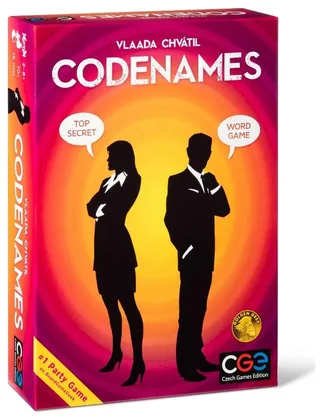
Two teams try to connect words through a spymaster’s clue. Consider it for older children and adults with similar English vocabulary who enjoy debating what someone meant.
Reading: English words and their meanings are central to play.
We recommend at least four for the classic team experience. The standard English game is a poor fit if reading confidence differs sharply.
Check the edition
Our catalogue entry is the older 14+ edition. CGE’s refreshed 2025 edition is labelled 10+; check the actual box, not just the name.
No matches in this shortlist.
Try “Any style” or reset the filters. We would rather show fewer choices than recommend a game above the selected age.
Player counts, starting ages and times refer to the editions in our catalogue; timings are not first-session estimates. Fit and watch-out notes are our editorial judgement. Product photographs and source credits are on each game page.
A little know-how
Will everyone get a turn they enjoy?
Start with the youngest player
A box age is a starting point. Ask what that person must do on each turn: read, react quickly, hold a plan in mind or wait patiently.
Make language a shared advantage
A game with picture cards can often be taught in Hindi or another shared language. That does not mean the supplied rulebook is in that language.
Plan for the real evening
Publisher play times do not include your whole first teaching session. If dinner, guests or bedtime may interrupt, favour separate short rounds.
A smaller family and a large gathering need different games.
A three- or four-person family can usually give a longer game a reliable place at the table. Ticket to Ride and Kingdomino reward that continuity. They are less suitable when a player needs to leave halfway through.
For a larger group, check the exact player limit before buying. Dobble and the refreshed Dixit base game stretch to eight. Do not assume an expansion or a different edition is included in the box.
Younger children deserve their own decisions.
Pairing a child with an adult can be a pleasant introduction, but it is different from the child playing independently. If the adult has to make every meaningful decision, a junior or children’s game may be the more generous choice.
Our children’s hub separates what the child needs to do from what an adult helps with. Cooperative options are useful when everyone wants to work together, although losing as a team is still possible.
Before you roll
A few good questions.
Which family board games work without much English?
Dobble, Kingdomino and Dixit rely mainly on pictures during play. An adult still needs to learn and explain the rules. Dixit also needs a shared way to give clues; Codenames relies much more heavily on vocabulary.
What should we buy for a family with a five-year-old?
Start with the children’s hub rather than lowering the age guidance on a larger family game. Dragomino, Rhino Hero and Outfoxed! are candidates there for different kinds of play. Check the exact box age and the child’s comfort with the task.
Is Catan a good choice for a big family gathering?
The standard base game is for three or four players. It suits a settled group that enjoys negotiation and has time for a longer session. It is not the same proposition as a quick game for guests arriving at different times.
Behind the shortlist
A little homework. A clearer choice.
Researched on 14 October 2026 using publisher pages, official rules and our edition-specific catalogue. Recommendations are editorial judgements, not claims of hands-on testing. We considered the decisions a player makes, reading demands, group size and the reasons a game may not fit. Inclusion does not imply current availability in India.
Open the source shelf
- Zygomatic · Dobble ↗
- Days of Wonder · Ticket to Ride ↗
- Blue Orange · Kingdomino rules ↗
- Libellud · Dixit ↗
- CGE · Codenames, current edition ↗
Our game pages link further edition evidence. Where editions differ, use the actual box and rulebook as the final reference.