


Party game · Indian edition available
Jenga
Pull a block, stack it on top, don't topple the tower
- 1–8best with 3-5
- 5–15 minper game
- About 2 minto set up
- 6+years
- Very easy
- Nonereading
The official listing, on Amazon.in
We couldn't confirm whether this listing sends the Indian or the imported box. Amazon shows today's price, the seller and delivery.
Paid link. We may earn a commission, at no extra cost to you.
The game in a nutshell
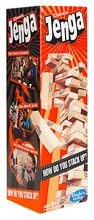
Jenga is Hasbro's wooden block-stacking game: you build a tower of 54 hardwood blocks, then take turns pulling one out with one hand and placing it on top until someone makes it fall. It suits mixed-age groups from six years up, because there is nothing to read and a child can beat a grandparent. In India, Hasbro's Classic Jenga is made here by Hasbro India, so you do not need an imported copy. The many cheaper 'tumbling tower' sets are different products.
Is Jenga right for you?
Great if
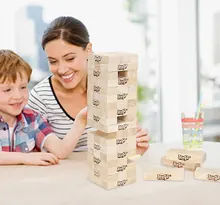
- Mixed-age family get-togethers where a six-year-old and a grandparent can play on equal terms
- Parties and festival evenings, since there are no cards to read and no rules to explain at length
- Quick rounds while waiting for dinner: a single tower usually lasts 5 to 15 minutes
- Playing alone: Hasbro's rules include a solo mode where you try to beat your own tallest tower
Skip it if
- You want a game with real planning between turns; Jenga is mostly a steady hand and nerve
- You have no flat, steady surface; a carpet or a wobbly table will end games early
- Someone is asleep nearby, because a falling tower of hardwood blocks is loud
A place on the honours list
Good company to be in.
Recognition from beyond our table.
National Toy Hall of Fame (The Strong National Museum of Play), 2020 (Inducted)
How Jenga plays
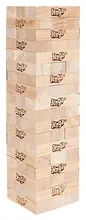
Tip the 54 wooden blocks onto a flat, steady table. Using the cardboard stacking sleeve, build a tower of 18 levels with three blocks in each level, each level laid at right angles to the one below. Then slide the sleeve away so the tower stands by itself.
- Time to teach: about 1 minute.
- Reading and language: Nothing to read during play. The short rules sheet is in English, but anyone can learn the game by watching one turn.

How to play JENGA (official rules, gameplay and instructions) | boardgamesTV x Hasbro · boardgamesTV · Official
Choose a video · Watch right here
If this creator doesn’t allow embedded playback, watch on YouTube ↗.
Your turn, step by step
- 1Pull
Using one hand, slide a block out from any level below the top complete level. You may tap blocks to find a loose one, but put back any you nudge out of place.
- 2Stack
Lay your block on top of the tower, at right angles to the level below. Always finish a level of three before starting a new one.
- 3Win
Whoever makes the tower fall loses, and the last player to stack a block safely wins. Playing alone, try to beat your own tallest tower.
The full explanation: how a game of Jenga goes
On your turn, use only one hand to pull a block from any level below the top complete level. You may tap or nudge blocks to find a loose one, but if you push one out of place you must put it right, again with one hand.
Place your block on top of the tower, at right angles to the blocks just below it. Always finish a level of three before you start a new one. Hasbro's current rules say your turn ends five seconds after you place the block, or as soon as the next player touches the tower.
Whoever makes the tower fall loses, and the last player to stack a block without toppling it wins. Hasbro's older rules sheet adds that the player who knocked it over rebuilds the tower for the next game. If you are playing alone, the aim is simply to build higher than your last try.
What's in the box
- 54Hardwood blocks
plain, unnumbered blocks of about 1.5 x 2.5 x 7.5 cm, enough for an 18-level tower - 1Stacking sleeve
cardboard sleeve that helps you build the tower straight, then slides off - 1Instructions
English; Indian listings describe the sleeve as coming 'with instructions'
Box: 28 × 9.8 × 8.1 cm, 0.99 kg. Handy to know for gifting and travel.
Contents from Indian listings for Hasbro India's Classic Jenga (E8267): '54 hardwood Jenga blocks, stacking sleeve with instructions'. This matches Hasbro's A2120 rules sheet. Block size is from Wikipedia; blocks vary very slightly by design. The Jenga Tube Pack (E8265) has the same blocks and sleeve in a carry tube with a handle, and Jenga Mini has 39 smaller blocks. Generic tumbling-tower sets often add dice and numbered blocks, which genuine Jenga does not have.
Where to buy
The official listing, on Amazon.in
We couldn't confirm whether this listing sends the Indian or the imported box. Amazon shows today's price, the seller and delivery.
Opens Amazon.in in a new tab.
Classic Jenga is made in India and sold by Hasbro India: Indian listings give India as the country of origin and name Hasbro India Toys Pvt. Ltd. (Mumbai). The Indian box is item E8267, with 54 hardwood blocks and a stacking sleeve. You do not need an imported copy.
How to make sure you get a genuine copyA little care before you click.
- The box and listing should say Hasbro or Hasbro Gaming and show the Jenga logo. Indian boxes name Hasbro India Toys Pvt. Ltd. (Mumbai), and Hasbro's rules say Jenga is a registered trademark of Pokonobe Associates.
- Check the price. A 'Jenga' that costs a fraction of the usual price is almost certainly a generic tumbling-tower set.
- Look at the contents. Hasbro's Classic Jenga has 54 plain hardwood blocks and a stacking sleeve, with no dice and no numbers printed on the blocks. Many generic sets come with numbered blocks and dice.
- Read the brand field, not just the title. Some listings put 'Jenga' or 'Original Jenga' in the title of a non-Hasbro set, or use it for unrelated toys such as cup-stacking games.
- Names like 'Tumbling Tower', 'Stacking Tower', 'Zinga' or 'Stack A Fun' mean a different product. That is fine if you only want a cheap block tower, as long as you know it is not Jenga.
We link to one Amazon.in listing that we've checked against the maker's own information. We don't show prices: Amazon shows today's price, the seller and delivery. Paid link. We may earn a commission, at no extra cost to you.
What reviewers and players say
Jenga is one of the few games where a six-year-old and a grandparent play on equal terms: there is nothing to read and the rules take a minute. Reviewers love the tension as the tower grows taller and shakier, and child-development testers like the practice it gives in steady hands and weighing up a risky move. The downsides are that it rewards a steady hand more than planning, and some players learn to take cheap, safe blocks, which groups fix with house rules. It joined the US National Toy Hall of Fame in 2020.
What people love
- Anyone can join in: no reading, a one-minute explanation, and ages six and up at one table
- Edge-of-the-seat tension that builds as the tower wobbles
- Watching everyone's faces when someone pulls a risky block is half the fun
- Good practice for steady hands, patience and thinking a move ahead
Common complaints
- Not much real strategy: success mostly comes down to finding loose blocks and keeping a steady hand
- Some players take cheap, safe blocks every turn, so groups add house rules such as having to take any block you touch
Based on 6 reviews and discussions
- Review Jenga Review (David Ireland, June 2025) · Zatu Games blog
- Review Classic Jenga (no author shown; page updated April 2023) · The Good Play Guide (UK)
- Players Are there any specific strategies in Jenga? (July 2011) · Board & Card Games Stack Exchange
- Players Are all Jenga blocks of exactly same size? (August 2012) · Board & Card Games Stack Exchange
- Award Jenga, inducted 2020 · The Strong National Museum of Play (National Toy Hall of Fame)
- Reference Jenga · Wikipedia
Summarised in our own words from the sources above. We don't use Amazon reviews or ratings.
More like Jenga
Our picks if Jenga isn't quite right
| Feature |
 Jenga
Jenga |
 Dobble
 |
|---|---|---|
| Players | 1–8 | 2–8 |
| Best with | 3-5 | 3-6 |
| Play time | 5–15 min | 15 min |
| Age | 6+ | 6+ |
| Rules | Easy | Easy |
| Indian edition | Yes | Yes |
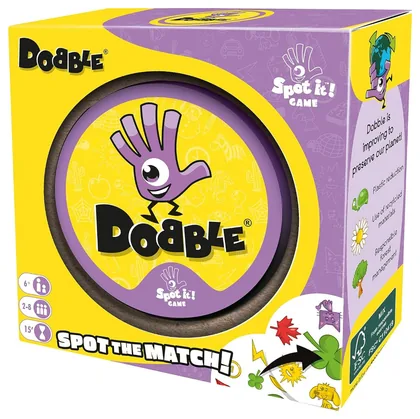
| Why look at it | This page | Another quick, no-reading game that works for every age at the same table |
More from Hasbro
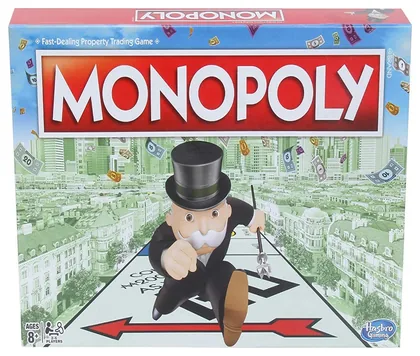
Monopoly
Roll, buy property, collect rent, and bankrupt everyone else

Taboo
Get your team to guess the word without saying the obvious ones
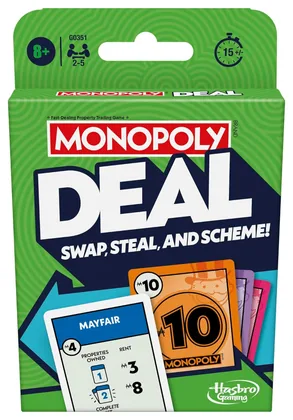
Monopoly Deal
Monopoly as a 15-minute card game of rent, raids and sets
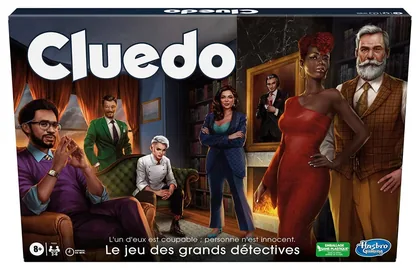
Cluedo
Work out who did it, where, and with which weapon

The Game of Life
Spin through college, jobs, family and retirement; richest player wins
Also made or sold in India by Hasbro India
Monopoly
Roll, buy property, collect rent, and bankrupt everyone else
Taboo
Get your team to guess the word without saying the obvious ones
Monopoly Deal
Monopoly as a 15-minute card game of rent, raids and sets
Cluedo
Work out who did it, where, and with which weapon
The Game of Life
Spin through college, jobs, family and retirement; richest player wins
More steady-hands games
See all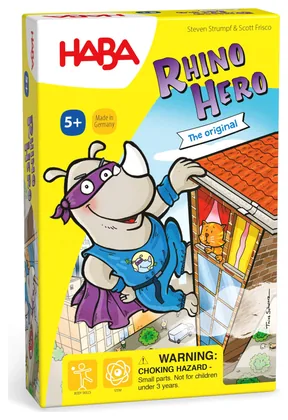
Rhino Hero
Build a wobbly card skyscraper without toppling the rhino
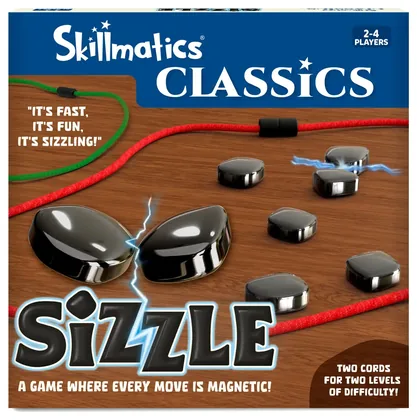
Sizzle
Place magnets inside a loop without letting them snap together.
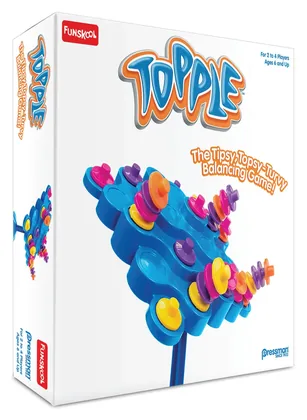
Topple
Roll, stack and score on a tower that tips and sways
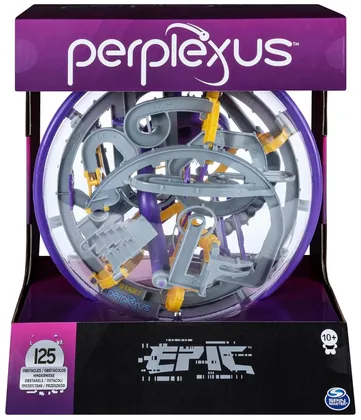
Perplexus Epic
A one-player 3D maze ball with 125 obstacles to beat
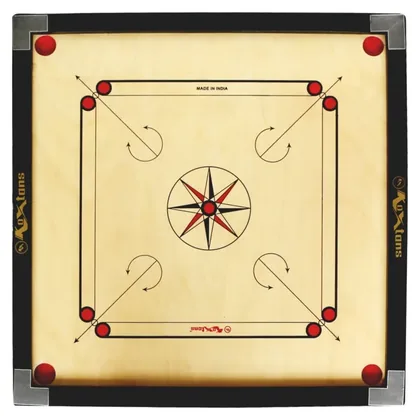
Carrom
Flick the striker, pocket your colour, then capture and cover the queen
Better with just two players
Sizzle
Place magnets inside a loop without letting them snap together.
Carrom
Flick the striker, pocket your colour, then capture and cover the queen
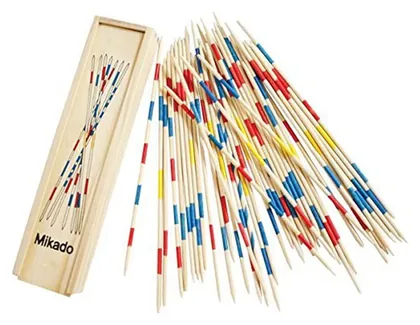
Mikado
Drop the sticks, then lift them one by one without a wobble
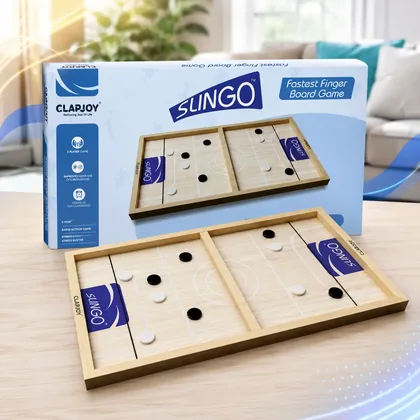
Sling Puck
Two players, ten pucks, one slot: clear your side first
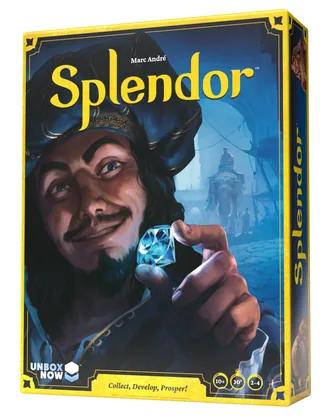
Splendor
A quick gem-trading race where every card makes the next easier.
Also worth a look (not in our catalogue yet): UNO Stacko – Mattel's block tower in UNO colours, where colours and numbers decide which block you may pull; Topple – Funskool's balancing game: add pieces to a wobbly board without tipping it over.
Questions people ask about Jenga
Is a 'tumbling tower' game the same as Jenga?
It uses the same basic idea, but it is a different product. Many companies sell wooden stacking towers under their own names, and that is perfectly legitimate. Only Hasbro's game, made under licence from Pokonobe Associates, may be called Jenga, so treat a non-Hasbro set sold as 'Jenga' with caution.
Is Jenga made in India?
Yes. Indian listings give India as the country of origin for Hasbro's Classic Jenga (item E8267), and the importer or marketer named is Hasbro India Toys Pvt. Ltd. in Mumbai. You do not need an imported copy.
How many blocks are in a Jenga set?
Classic Jenga has 54 hardwood blocks. They build a tower of 18 levels with three blocks each. The box also includes a cardboard stacking sleeve that helps you set the tower up straight.
Should I buy Classic Jenga or the Jenga Tube Pack?
Both have the same 54 hardwood blocks and the same rules. The Tube Pack (item E8265) stores the blocks in a tube with a carry handle, which helps if you take it to friends' homes. It costs a little more than the classic box.
Game facts
- Designed by
- Leslie Scott
- Publisher
- Hasbro (under licence from Pokonobe Associates, which owns the Jenga trademark)
- In India
- Hasbro India Toys Pvt. Ltd. (Mumbai)
- First published
- 1983
- Players
- 1–8
- Barcode
- 630509889051
- Language
- No reading – Nothing to read during play. The short rules sheet is in English, but anyone can learn the game by watching one turn.
- Box size and weight
- 28 × 9.8 × 8.1 cm, 0.99 kg
- Awards
- National Toy Hall of Fame (The Strong National Museum of Play), 2020 (Inducted)
Sources & photo creditsThe references behind this guide.
Facts on this page come from the publisher, the Indian maker or distributor, and the sources below. Photos are credited under each one.
- Jenga - Wikipedia
- Hasbro India - Classic Jenga (A2120) product and instructions page
- Hasbro - Classic Jenga instructions (A2120, multilingual PDF)
- Hasbro - Jenga game rules (53557, PDF)
- Toycra - Hasbro Gaming Classic Jenga (E8267)
- Toycra - Hasbro Gaming Jenga Tube (E8265)
- Crossword - Classic Jenga by Hasbro Gaming
- Hamleys - Hasbro Gaming Original Classic Jenga
- FirstCry - Hasbro Jenga Classic Game