
Everyone at the table
Same table. Many languages.
One person is happiest in Hindi, another answers in English, and the cousins switch between both. Choosing a game shouldn't mean choosing who gets to feel fluent.
Find your kind of game ↓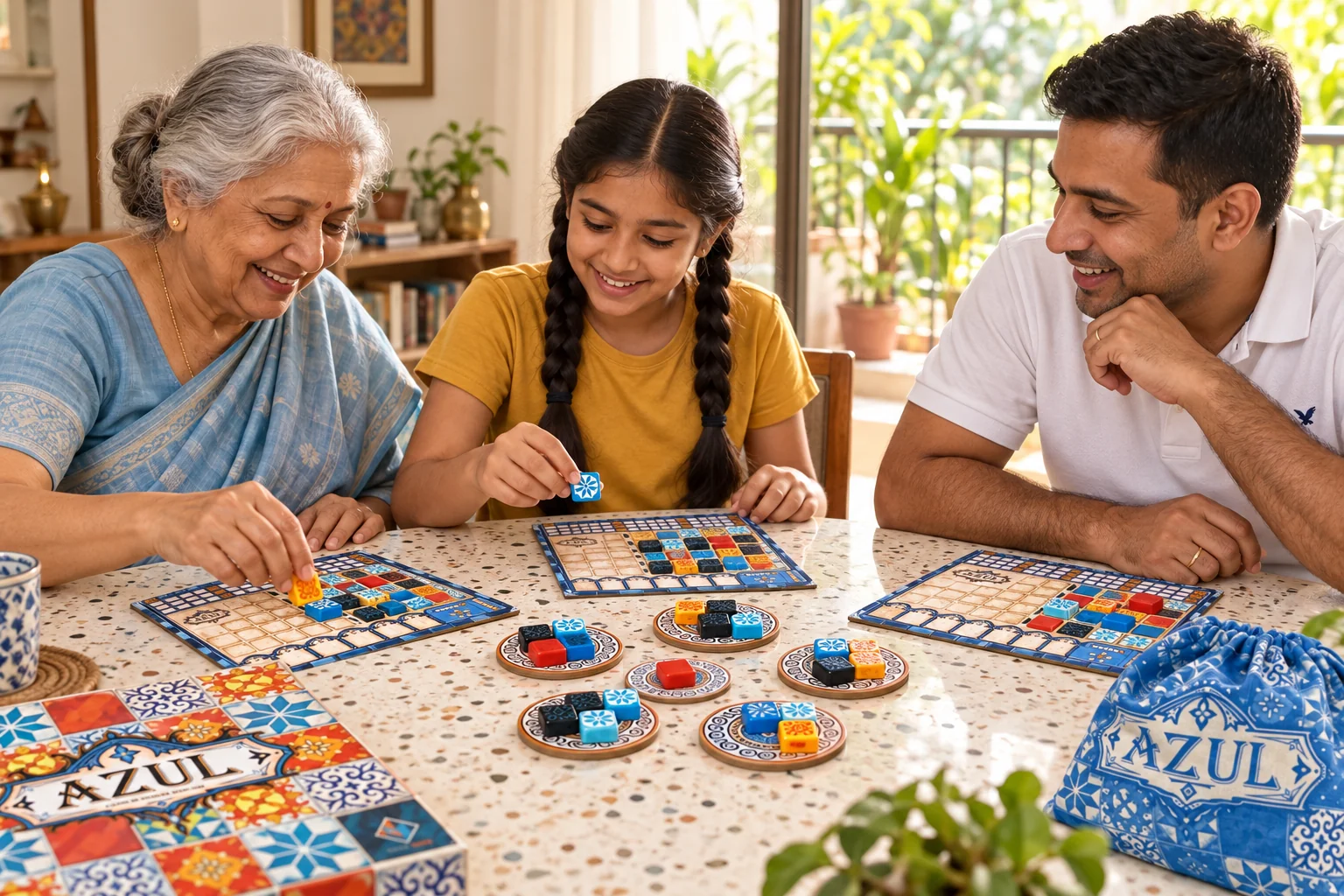
Look for games where the important information is in pictures, patterns or numbers. Someone still needs to understand and teach the rules. But after that explanation, the game needn't become a reading test.
These four are our starting shortlist. “No English reading during play” does not mean “no counting”, “no explanation” or “equally easy for everyone”.
Four ways to get everyone involved
Compare at a glance ↔ Scroll the table on smaller screens
| Game | What players use | Our suggested fit | Watch for |
|---|---|---|---|
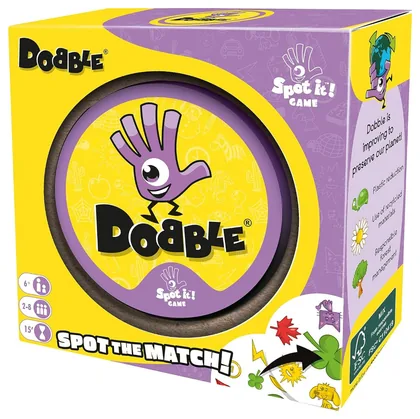
| Dobble | Matching pictures and calling them out | A lively table that enjoys quick reactions | Speed and small symbols can exclude some players |
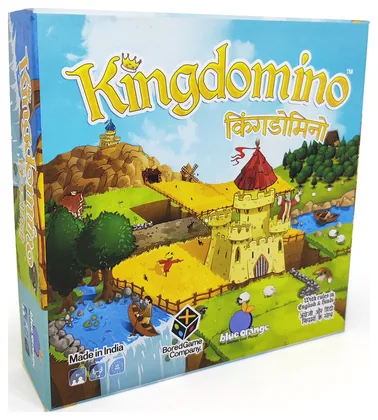
| Kingdomino | Landscapes, crowns and a numbered scoring system | A quieter family game | Someone must explain the scoring |
| Azul | Coloured patterns and scoring tracks | People who enjoy deliberate choices | Colours, patterns and penalties need a clear demonstration |
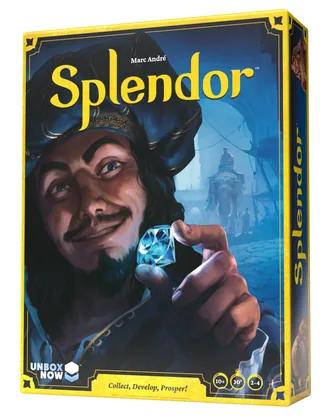
| Splendor | Gem symbols, quantities and points | A group that enjoys planning purchases | Symbols are still a system to learn |
Our reading-demand assessment comes from the publishers' components and rules, together with the catalogue's game research: Dobble, Kingdomino rules, Azul rules and Splendor. The suggested fit is our editorial judgement.
For instant energy: Dobble
The challenge is spotting the matching picture. Before playing, agree familiar names for the symbols in whatever languages your group uses. That is a hosting suggestion, not a special translated edition. If speed makes anyone uncomfortable, choose a turn-based game instead. See Dobble →
For a calmer table: Kingdomino
Its landscape tiles avoid word-heavy cards. We would choose it for a group that wants to think without racing. Teach the scoring with a tiny example first; removing English doesn't remove the need to understand how points work. See Kingdomino →
For pattern lovers: Azul
The tiles do the talking. Our advice is to show a complete example of choosing, placing and scoring before anyone worries about a clever move. Make sure every player can distinguish the patterns comfortably in the light you'll be using. See Azul →
For a little more planning: Splendor
Cards communicate their costs and rewards through symbols and numbers. This is our pick when the group wants a thinking game without reading sentences on every turn. Explain the difference between spending tokens and keeping card bonuses: that distinction matters more than knowing English. See Splendor →
Give everyone the same starting line
Explain the aim before the exceptions. Put a few pieces down and show a sample turn. Invite another player to demonstrate the next one, so you can spot confusion before it becomes frustrating.
Ask whether the symbols are comfortable to see and handle. A game can have no text and still be a poor fit for someone who finds tiny pictures, colour distinctions or quick reactions difficult. Choose around the actual people at your table, rather than treating “language-free” as a guarantee of accessibility.
Avoid having one confident player translate every private card for everyone else. It interrupts the flow and may reveal information the game expects to stay hidden. A game whose components already suit the group is the more comfortable starting point.
A Hindi rulebook isn't the whole story
When buying in India, ask separately about the language of the instructions and the language printed on cards. A Hindi explanation can help teach a game whose cards remain in English.
For example, English-edition Codenames depends on understanding word meanings. We would not choose it for this particular brief, even if one person can explain every rule in Hindi. The publisher describes its word-card and clue system here.
Our shortlist: Dobble for speed and laughter; Kingdomino for a gentler pace. Choose Azul or Splendor when the group wants more time to consider each move. Check the exact box and current Indian listings on the game page before buying.
Our recommendations draw on publisher information, official rules and catalogue research. Suitability advice is our editorial judgement. Sources are linked throughout; these are researched guides, not claims of hands-on testing.
From reading to playing
The games, at a glance.
Compare the fit. Then check the exact edition and seller.

One good read deserves another