
Board games for beginners in India
Played Monopoly.What next?
You don’t need a shelf full of games. You need one that makes everyone say, “Again?” Here is how to choose a first modern board game that fits the people you actually play with.
Find your first good fit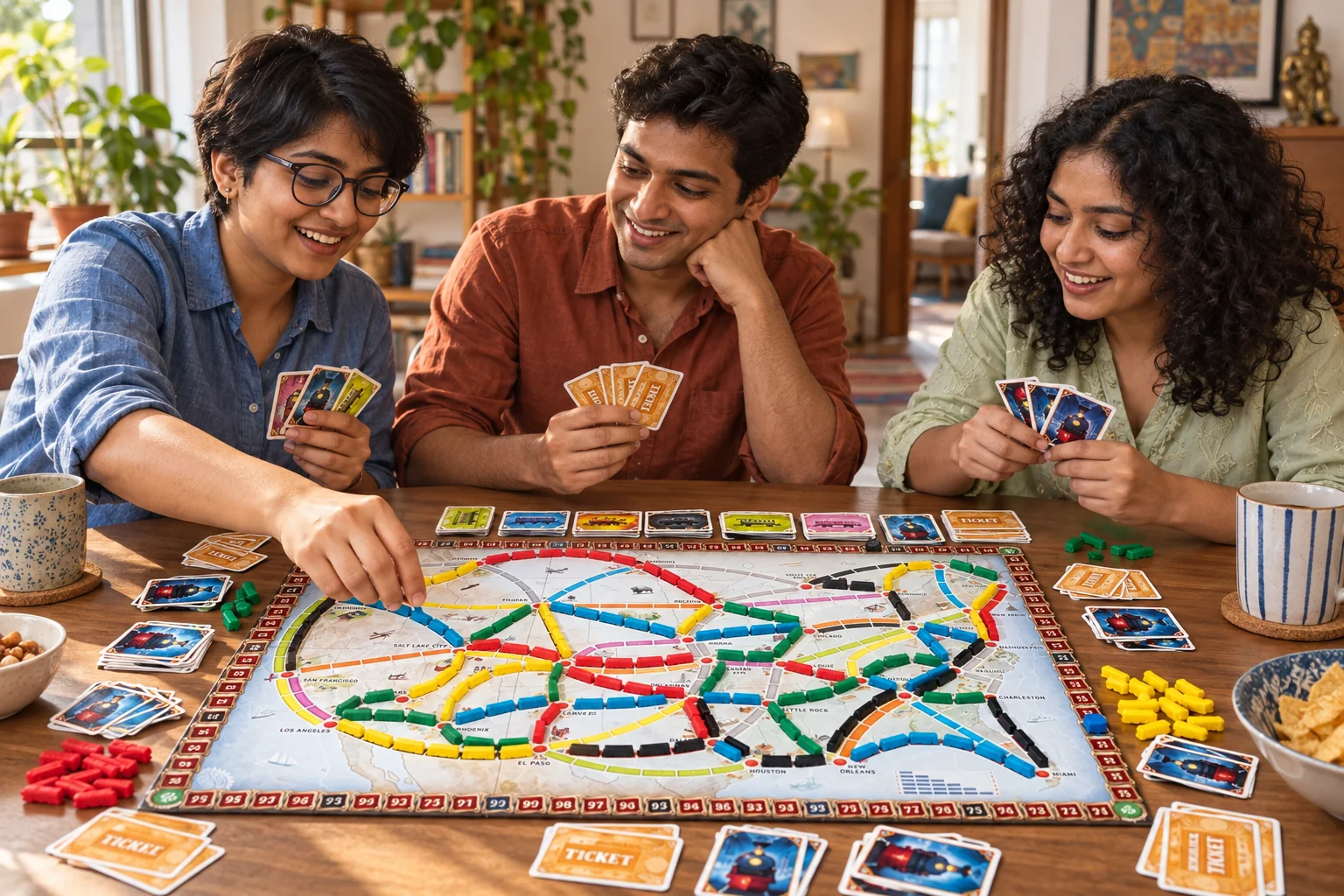
The short answer
Buy for your next evening, not an imaginary one.
For a familiar-looking shared board, start with Ticket to Ride. For a visual puzzle, look at Azul. For a compact set of repeatable choices, consider Splendor. Catan belongs on the shortlist when your group wants negotiation and a longer session.
“Let’s play around a board.”
A map, a destination and a clear next move.
“Give me a satisfying puzzle.”
Pictures and patterns instead of paragraphs.
“We like making a deal.”
A talkative table with time to settle in.
The boardgames.in shortlist
Four ways into a much bigger world.
These are starting points for different tastes—not a ranking everyone should follow.
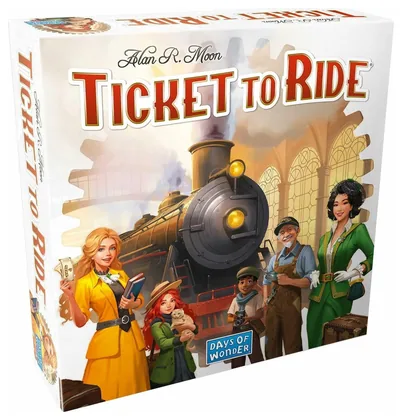
Collect coloured train cards and claim routes between cities. The map makes the goal visible, which is helpful when people are meeting a new style of board game for the first time.
Reading: City names on destination tickets; otherwise largely visual.
This still needs a rules explanation and everyone’s attention. Routes are contested, so it is not simply a relaxing train-building activity.

Choose tiles from shared displays and plan where they will fit. We would show this to someone who is more excited by a tactile puzzle than an elaborate fictional world.
Reading: No text on tiles; learn the placement and scoring system.
The scoring takes explanation, and leftover tiles can hurt. It is not a cooperative puzzle or a game where every choice works equally well.
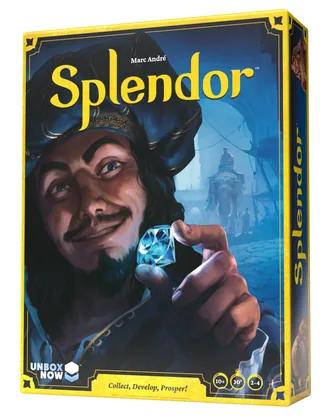
Use gem tokens to buy cards, then use those cards to make later purchases easier. The appeal is in recognising a useful next step rather than remembering a long sequence of actions.
Reading: Colours, symbols and numbers rather than card paragraphs.
A simple turn does not make the strategy automatic. Expect a more experienced opponent to see opportunities you miss at first.
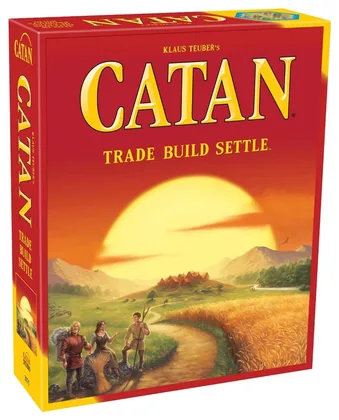
Roll for resources, trade and build settlements. Consider Catan when bargaining sounds like part of the fun and three or four players can give a longer game their attention.
Reading: Resource pictures plus short text on development cards.
Dice can frustrate carefully made plans. The standard base game does not accommodate two players, and a busy, interrupted gathering is a poor first setting.
No matches in this shortlist.
Try “Any style” or reset the filters. We would rather show fewer choices than recommend a game above the selected age.
Player counts, starting ages and times refer to the editions in our catalogue; timings are not first-session estimates. Fit and watch-out notes are our editorial judgement. Product photographs and source credits are on each game page.
A little know-how
Three checks before the first box.
Count your usual players
Buy for the group that will use it most often. A brilliant four-person game is the wrong first purchase if you mostly play as a pair.
Look at a normal turn
Read the rules or watch a publisher’s explanation. Focus on what everyone actually does, rather than being impressed by the size of the box.
Know which box you need
Choose a standalone base game. An expansion, junior edition or similarly named sequel may be a different purchase with different requirements.
“Modern” is a description, not a difficulty level.
There is no official border between a traditional game and a modern one. Here, we mean games that offer a different experience from familiar staples such as Monopoly: claiming routes, drafting tiles or building up a small system of cards. Some are easier to learn than others.
The useful question is not whether you are a “gamer”. It is whether you enjoy the decisions a particular game asks you to make. A quick look at one normal turn tells you more than a list of awards.
Give the first session a fair chance.
Have one person read the rules before everyone sits down. Set up the components, show the goal and demonstrate a turn. Then explain the exceptions when they matter. Keep the rulebook nearby rather than guessing at an unfamiliar rule.
Allow extra time, and resist buying several games before you know what people enjoyed about the first. After a session, ask what they wanted more of: conversation, cooperation, a clever puzzle or a quicker finish.
Buying a board game in India: check the edition.
Start from the exact game page for the edition notes and Amazon.in purchase link. Confirm the title, language, contents and whether the product is standalone before paying. The words “Ticket to Ride” also appear on expansions and junior games; those are not interchangeable.
Imported and Indian-market boxes may differ in artwork or packaging. Use the publisher and edition information to understand what is being offered. Prices and availability change, so check the current listing rather than treating an old price in an article as a promise.
Before you roll
A few good questions.
Which board game is easiest for a beginner?
“Easy” depends on the person. Ticket to Ride offers a visible map and repeatable actions; Splendor offers a small set of choices; Azul offers a visual puzzle but needs a scoring explanation. Choose according to the decisions your group enjoys.
Is Catan the best first modern board game?
It is a good candidate for three or four people who like trading and can commit to a longer session. It is a weaker fit for a couple, a very short evening or players who dislike dependence on dice. It does not have to be everyone’s first purchase.
What if we mostly play with younger children?
Use our children’s hub, where recommendations separate reading, turn-taking and adult help. A children’s edition such as Ticket to Ride: First Journey can make more sense than helping a child through every decision in the adult game.
Behind the shortlist
A little homework. A clearer choice.
Researched on 14 October 2026 using publisher pages, official rules and our edition-specific catalogue. Recommendations are editorial judgements, not claims of hands-on testing. We considered the decisions a player makes, reading demands, group size and the reasons a game may not fit. Inclusion does not imply current availability in India.
Open the source shelf
- Days of Wonder · Ticket to Ride ↗
- Next Move · Azul rules ↗
- Space Cowboys · Splendor ↗
- CATAN · Base game ↗
Our game pages link further edition evidence. Where editions differ, use the actual box and rulebook as the final reference.