


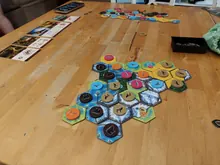

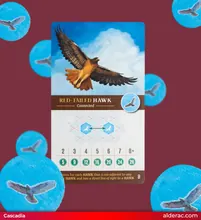

Family game
Cascadia
Build a Pacific Northwest landscape and fill it with wildlife
Tile layingPick and passPattern buildingSolo puzzles
- 1–4best with 2-4
- 30–45 minper game
- About 5 minto set up
- 10+years
- Easy
- Littlereading
The official edition, on Amazon.in
There's no Indian edition, so this is the official imported game. Amazon shows today's price, the seller and delivery.
Paid link. We may earn a commission, at no extra cost to you.
The game in a nutshell
Cascadia is a calm tile-laying puzzle for 1 to 4 players aged 10 and up: you build a landscape of forests, rivers, wetlands, prairies and mountains and fill it with bears, elk, salmon, hawks and foxes, in about 30 to 45 minutes. It won Germany's Spiel des Jahres in 2022 and suits families, couples and anyone who liked Azul or Kingdomino and wants a little more to think about. Our link goes to the English edition from AEG and Flatout Games, an import.
Is Cascadia right for you?
Great if
- Families with children from about 10 up to grandparents: no attacking, and everyone builds their own landscape
- Couples: it works well with two, and there is a solo mode for quiet evenings
- Puzzle lovers who enjoyed Azul or Kingdomino and want a step up
- A gift for someone new to modern board games: short, pretty and an award winner
Skip it if
- Your group wants lots of interaction, bluffing or loud table talk
- You dislike adding up scores at the end: scoring takes some care
- Your children are under 10; Cascadia Junior (ages 6+) is the simpler family version
A place on the honours list
Good company to be in.
Recognition from beyond our table.
Spiel des Jahres (Germany's Game of the Year), 2022 (Winner)
Deutscher Spiele Preis, 2022 (2nd place)
International Gamers Award, Solo, 2022 (Winner)
How Cascadia plays
Set-up: each player takes a starter habitat tile. Shuffle the habitat tiles face down and use only as many as you need (43 for two players, 63 for three, 83 for four), so that everyone gets exactly 20 turns. Put all 100 animal tokens in the cloth bag. Choose one wildlife scoring card for each of the five animals (the 'A' cards are suggested for a first game), then lay out four habitat tiles, each paired with an animal token drawn from the bag.
- Time to teach: about 10 minutes.
- Reading and language: The habitat tiles and animal tokens have no words. The wildlife scoring cards show their patterns mostly in pictures with a little English, and the rulebook is in English; we found no Hindi edition. Once one person has read the rules, a mixed-language family can play without trouble.

Cascadia - How to Play Board Game · Meeple University
Choose a video · Watch right here
If this creator doesn’t allow embedded playback, watch on YouTube ↗.
Your turn, step by step
- 1Pick
Take one of the four habitat-tile-and-animal pairs on display, or spend a nature token to take any tile with any animal.
- 2Place
Add the tile next to your landscape, then put the animal on one of your tiles that shows it; a keystone tile earns you a nature token.
- 3Score
After 20 turns each, score your five wildlife cards, your largest area of each habitat plus majority bonuses, and leftover nature tokens; the highest total wins.
The full explanation: how a game of Cascadia goes
A turn: pick one of the four tile-and-animal pairs. Place the tile next to your growing landscape, then place the animal on any of your tiles that shows that animal; each tile can hold only one. If you place an animal on a keystone tile (a tile with a single habitat), you gain a pine-cone nature token. Refill the display and play passes on.
Nature tokens and overpopulation: spend a nature token to take any tile with any animal on display, or to swap out as many of the displayed animals as you like. If all four animals on display are the same, they are swapped out automatically; if three match, the player whose turn it is may swap them out once.
How you win: after everyone's 20th turn, score each of the five wildlife cards (bears might want to be in pairs, foxes next to different animals, and so on), score your largest connected area of each habitat at 1 point per tile, plus bonuses for the largest areas (3 and 1 points with 3 or 4 players, 2 points with two), and 1 point per unspent nature token. The highest total wins.
Tip: for younger players or a first game with grandparents, use the Family variant, which replaces the five wildlife cards with a single simple card that rewards groups of any shape. The rulebook also has a solo mode and a set of scenarios to work through, which makes it a nice quiet game for school holidays.
What's in the box
- 85Habitat tiles
Mountains, forests, prairies, wetlands and rivers; 25 are single-habitat keystone tiles - 5Starter habitat tiles
One per player - 100Wildlife tokens
20 each of bear, elk, salmon, hawk and fox - 25Nature tokens
Pine cones; worth 1 point each if unspent - 21Wildlife scoring cards
4 for each animal plus 1 Family/Intermediate card - 1Cloth bag
For drawing wildlife tokens - 1Score pad
- 1Rulebook
English
Box: 1.08 kg. Handy to know for gifting and travel.
From the component list in a transcription of the official rulebook (RulesPal), which matches the contents a review gives for the retail box. AEG's own rulebook PDF is image-only, so we couldn't read its list directly. The Kickstarter edition added a bonus set of wildlife scoring cards; Landmarks adds its own pieces and needs this base game.
Where to buy
The official edition, on Amazon.in
There's no Indian edition, so this is the official imported game. Amazon shows today's price, the seller and delivery.
Opens Amazon.in in a new tab.
Cascadia is published in English by AEG together with Flatout Games, and copies sold in India are imports; we found no Indian-made or Hindi edition. Indian specialist stores list the same English retail edition. Our Amazon.in link goes to that retail edition, the complete base game for 1 to 4 players. The Cascadia Landmarks box that also turns up in searches is an expansion and needs this base game.
How to make sure you get a genuine copyA little care before you click.
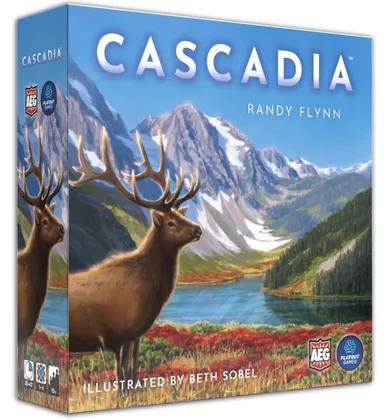
- The box should carry the AEG and Flatout Games names and credit Randy Flynn (design) and Beth Sobel (art).
- AEG's product code is AEG 7098, and a US retailer gives the barcode as 729220070982. Ask the seller for a photo of the barcode if in doubt.
- Count the main pieces: 85 habitat tiles (25 of them single-habitat keystone tiles), 5 starter habitat tiles, 100 animal tokens (20 each of bear, elk, salmon, hawk and fox), 25 pine-cone nature tokens, 21 wildlife scoring cards, a cloth bag and a score pad.
- Check you are buying the base game: Cascadia Landmarks is an expansion, and Cascadia Junior and the Rolling Hills and Rolling Rivers boxes are different games.
- Look closely at the print: Beth Sobel's animal and landscape art should be sharp and the tiles sturdy. Blurry art, washed-out colours or thin tiles are warning signs.
We link to one Amazon.in listing that we've checked against the maker's own information. We don't show prices: Amazon shows today's price, the seller and delivery. Paid link. We may earn a commission, at no extra cost to you.
What reviewers and players say
Reviewers we read call Cascadia a relaxing but clever puzzle: the rules take minutes to learn, every turn lets you do something useful, and the wildlife scoring cards change from game to game. They praise Beth Sobel's art, the solo mode and how well it works for families and newcomers. The common criticisms are little interaction between players, some luck in which tile-and-animal pairs come up, and end-game scoring that takes care, with similar tile colours that can be hard to read. Players who struggled with Wingspan say Cascadia is much easier to pick up.
What people love
- Quick to learn, with a satisfying two-part puzzle of habitats and animals
- Changing wildlife scoring cards keep every game fresh
- Beth Sobel's art and the calm nature theme
- A strong solo mode, and it works from one to four players
Common complaints
- Little interaction: you mostly just take tiles that others wanted
- Some luck in which tile-and-animal pairs appear
- End-game scoring is the trickiest part, and similar tile colours can be hard to tell apart
Based on 7 reviews and discussions
- Review Board Game Review: Cascadia (Sam, June 2025) · Frontline Gaming
- Review Nature Provides Beautiful Freedom in 'Cascadia' (Brody Sheard, September 2021) · The Fandomentals
- Review Cascadia review (Andy Matthews, September 2020) · Meeple Mountain
- Players is it more easy to understand than wingspan ? (JFranck7 and others, November 2025) · Steam Community, Cascadia discussions
- Award Cascadia - Spiel des Jahres 2022 and jury statement · Spiel des Jahres
- Award International Gamers Awards winners list · International Gamers Awards
- Reference Cascadia (board game): reception and awards · Wikipedia
Summarised in our own words from the sources above. We don't use Amazon reviews or ratings.
More like Cascadia
Our picks if Cascadia isn't quite right
| Feature |
 Cascadia
 |
 Terraforming Mars
 |
 Azul
Azul |
 Kingdomino
 |
|---|---|---|---|---|
| Players | 1–4 | 1–5 | 2–4 | 2–4 |
| Best with | 2-4 | 3-4 | 2-4 | 2 or 4 |
| Play time | 30–45 min | 1.5–2 hrs | 30–45 min | 15–25 min |
| Age | 10+ | 12+ | 8+ | 8+ |
| Rules | Easy | Involved | Easy | Easy |
| Indian edition | Import | Import | Yes | Yes |
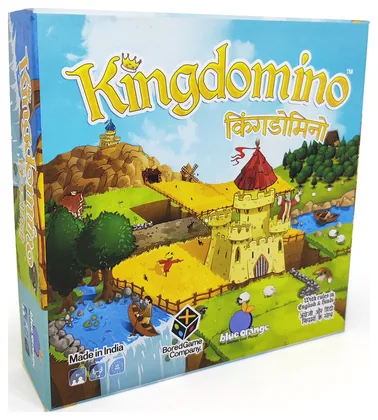
| Why look at it | This page | A much longer, heavier engine-builder for dedicated strategy nights | Another calm, good-looking tile puzzle, with a little more blocking between players | Simpler and quicker landscape-building, good for younger children |
More tile-laying games
See allKingdomino
Build a tiny kingdom from land dominoes in twenty minutes

Qwirkle
Match colours or shapes to build lines of six tiles

Carcassonne
Build a medieval map tile by tile, then claim it
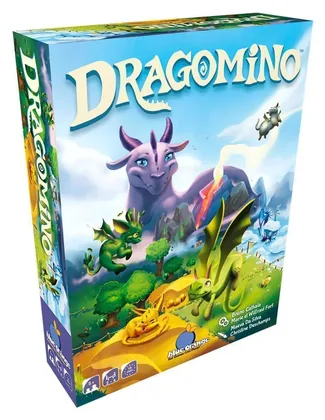
Dragomino
Kingdomino for five-year-olds: match landscapes, hatch baby dragons

Labyrinth
Shift the maze walls to reach your treasures first
Questions people ask about Cascadia
Is Cascadia available in India?
Yes, as an import. The English retail edition from AEG and Flatout Games is sold in India, and we found no Indian-made or Hindi edition. Our Amazon.in link goes to that base game.
Can you play Cascadia with 2 players or alone?
Yes. With two players you use 43 habitat tiles and the habitat bonuses change slightly, and the game works well for couples. There is also a solo mode, in which the tiles and animals on display slide along and drop off each turn.
Is Cascadia good for kids?
The box says 10 and up, and the rules are short enough for most children of that age; the Family variant uses one simple scoring card to make it easier. For children from 6, AEG and Flatout Games make Cascadia Junior, a separate, simpler game.
Do I need Cascadia Landmarks?
No. Landmarks is an expansion that adds landmark pieces with end-game bonuses and lets up to 6 people play. It doesn't work on its own, so buy the base game first.
Is Cascadia easier than Wingspan?
Yes, for most people. Cascadia has only two steps per turn, no card text to read during play and shorter games of 30 to 45 minutes, and players who couldn't get into Wingspan have said they found Cascadia much easier to pick up.
Game facts
- Designed by
- Randy Flynn
- Publisher
- AEG (Alderac Entertainment Group), co-published with Flatout Games
- First published
- 2021
- Players
- 1–4
- Barcode
- 729220070982
- Language
- Little reading – The habitat tiles and animal tokens have no words. The wildlife scoring cards show their patterns mostly in pictures with a little English, and the rulebook is in English; we found no Hindi edition. Once one person has read the rules, a mixed-language family can play without trouble.
- Box size and weight
- 1.08 kg
- Awards
- Spiel des Jahres (Germany's Game of the Year), 2022 (Winner); Deutscher Spiele Preis, 2022 (2nd place); International Gamers Award, Solo, 2022 (Winner)
Sources & photo creditsThe references behind this guide.
Facts on this page come from the publisher, the Indian maker or distributor, and the sources below. Photos are credited under each one.
- AEG - Cascadia (publisher's page: players, time, age, credits, rulebook)
- AEG store - Cascadia (SKU AEG7098, co-published by AEG and Flatout Games)
- Flatout Games - Cascadia
- Cascadia base game rulebook (AEG PDF)
- Cascadia rulebook transcription - RulesPal
- Cascadia (board game) - Wikipedia
- Cascadia - Spiel des Jahres 2022
- International Gamers Awards - Winners
- Alderac Entertainment Group, Flatout Games Ink Production, Sales Agreement - ICv2 (March 2021)
- Cascadia Junior press release - AEG
- Cascadia Retail Edition - Board Games India
- AEG 7098 Cascadia - Contrarian Gaming (US retailer listing with barcode)
- Board Game Review: Cascadia (Sam, Frontline Gaming, June 2025)
- Nature Provides Beautiful Freedom in 'Cascadia' (Brody Sheard, The Fandomentals, September 2021)
- Cascadia review (Andy Matthews, Meeple Mountain, September 2020)