


Traditional game
Memory Chess
Remember where the colours hide and pull out the right peg
- 2–4best with 2-3
- 10–15 minper game
- Under a minuteto set up
- 3+years
- Very easy
- Nonereading
A well-made set, on Amazon.in
Many brands make this game. We picked one well-made set; check its size and pieces in the listing before you buy.
Paid link. We may earn a commission, at no extra cost to you.
The game in a nutshell
Memory chess isn't chess at all: it's a wooden colour-memory toy for young children. Coloured pegs, often called match sticks, sit in a small board with their colours hidden at the bottom, and players roll a colour die and try to pull out a peg of that colour, remembering where each colour turned up. It suits children of about 3 to 7 and the grown-ups playing with them. Many brands sell almost the same toy; the set we link is Toy Imagine's wooden version.
Is Memory Chess right for you?
Great if
- Children of about 3 to 7: it practises colours, turn-taking and remembering where things are
- A quick game a grandparent or older sibling can play with a small child, with nothing to read
- Travel and waiting rooms: the board is small and there are only pegs and a die to keep track of
- An inexpensive birthday or return gift for a young child
Skip it if
- Your child is 8 or older: once memory is good, it soon gets repetitive
- You were looking for a real chess set for a child: this has nothing to do with chess, so see our chess page instead
- Children under 3 are around: the pegs and the die are small parts
How Memory Chess plays
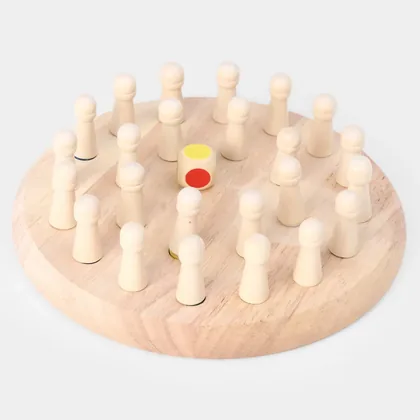
What's in a set: most have a small wooden board with a ring or grid of holes, 24 wooden pegs in six colours (four of each) and a die with a colour on each face. Each peg's colour is painted at its bottom end and the tops all look the same, so once the pegs are in the board nobody can tell which is which.
- Time to teach: about 2 minutes.
- Reading and language: Nothing to read: the colours do all the work, so it suits children who can't read yet and grandparents who prefer to explain games in Hindi or another language. The rules leaflet in these sets is usually a short sheet in English.
Your turn, step by step
- 1Roll
Roll the colour die to see which colour you're looking for.
- 2Pull
Pull out one peg and look at its hidden end. If the colour matches, keep the peg.
- 3Remember
If it doesn't match, show everyone and put it back in the same hole. Everyone tries to remember where that colour is.
- 4Win
When the board is empty, the player with the most pegs wins.
The full explanation: how a game of Memory Chess goes
Set-up: mix the pegs and push them into the holes with the colours hidden. Some families start by pulling out a few pegs, showing their colours and putting them back, so everyone has something to remember from the first turn.
A turn: roll the colour die, then pull out one peg. If its hidden end matches the colour you rolled, you keep it. If not, show everyone the colour and put it back in exactly the same hole; that's when the other players try to remember it. If you roll a colour that has run out, roll again. Then it's the next player's turn.
Winning: when the board is empty, whoever has collected the most pegs wins. Rules leaflets differ from brand to brand, so treat this as the common version and agree on the details first.
Variants: play without the die, with each player calling out a colour for the next player to find; let a correct pull earn another roll; race to collect one peg of every colour; or play together as a team, trying to clear the board in as few turns as possible. A parent and a 3-year-old can simply take turns finding colours, with no winner at all.
What's in the box
- 1Wooden board
with holes for the pegs; other brands' boards are about 16 to 17 cm across - 24Coloured pegs (match sticks)
usual count: four in each of six colours, with the colour painted at the bottom end - 1Colour die
usual in these sets, with the six peg colours on its faces; not mentioned in Toy Imagine's title - 1Rules leaflet
usually a short sheet in English
No contents list for Toy Imagine's set could be found: its title mentions only a wooden board and match sticks for ages 3+. This list shows what most wooden memory chess sets contain, based on other makers' and Indian store listings (Clapjoy's combo lists 24 coloured pegs; other sets list pegs and a die). Count the pegs and check for the die when you open the box.
Where to buy
A well-made set, on Amazon.in
Many brands make this game. We picked one well-made set; check its size and pieces in the listing before you buy.
Opens Amazon.in in a new tab.
There's no original or Indian edition of memory chess: it's a generic toy, and many brands sell almost the same wooden board and pegs, most of them without saying where they're made. Some Indian toy makers, such as Clapjoy, sell their own versions. Whichever you choose, look for the ISI mark and a BIS licence number on the box, which every toy sold in India must carry. Our Amazon.in button goes to Toy Imagine's wooden set.
How to pick a good setWhat to check in the listing before you buy.
- ISI mark: since January 2021, toys sold in India must meet Indian safety standards and carry the ISI mark under a BIS licence. Look for the mark and a licence number starting CM/L on the box.
- Paint and finish: the hidden colours should be bright and clearly different (not two blues a child can't tell apart), and they shouldn't rub off on fingers. Look for non-toxic, water-based paint and smooth, sanded wood with no splinters.
- Piece count: most sets have 24 pegs, four in each of six colours, plus a die showing the same six colours. Count them when you open the box.
- Fit: the pegs should slide in and out easily but not fall out when the board is tipped, and every peg top should look identical so nobody can spot a mark.
- Size: boards are usually about 16 to 17 cm across, with pegs about 5 cm long, easy for small hands. The pegs and the die are small parts, so keep them away from children under 3.
- Storage: a box or cloth bag matters, because one lost peg spoils the counting.
- Wood or plastic: wooden sets feel nicer in the hand and last; plastic ones are lighter and easier to wash.
We link to one well-made set from a maker we could identify; other good sets exist. We don't show prices: Amazon shows today's price, the seller and delivery. Paid link. We may earn a commission, at no extra cost to you.
What reviewers and players say
There are no independent reviews of memory chess that we could find, so this summary rests on how makers and Indian store listings describe it. They present it as a simple, screen-free colour and memory game for small children, and that's what it is: easy to explain, quick to play and good for practising colours and turn-taking. The weak points are what you'd expect from a generic toy: rules differ from brand to brand, the leaflets are brief, and quality depends on the set you get. It suits families with children of about 3 to 7; older children soon outgrow it.
What people love
- Simple enough for a 3-year-old, with nothing to read
- Practises colours and memory in a game rather than a lesson
- Small, light and quick: good for travel and short attention spans
Common complaints
- Rules vary from brand to brand, and the leaflet is often only a few lines
- The die adds a lot of luck, so older children lose interest
- Quality varies between brands, so the paint and the fit of the pegs are worth checking
Based on 5 reviews and discussions
- Reference Wooden Memory Chess & Tic Tac Toe (Combo) (Clapjoy, undated) · Clapjoy
- Reference Simarr Toys Wooden Memory Chess Game (store listing, undated) · Indian toy store listing
- Reference Play Nation Wooden Memory Matchstick Chess Game Set (store listing, undated) · Indian toy store listing
- Reference Nini Toys Wooden Memory Chess Game (store listing, undated) · Online store listing
- Reference Indian Standards on toys: ensuring your child's safety (BIS, undated) · Bureau of Indian Standards
Summarised in our own words from the sources above. We don't use Amazon reviews or ratings.
More like Memory Chess
Our picks if Memory Chess isn't quite right
| Feature |
 Memory Chess
 |
 Match & Move Memory
 |
 Hoot Owl Hoot!
 |
 Dobble
 |
|---|---|---|---|---|
| Players | 2–4 | 1–4 | 2–4 | 2–8 |
| Best with | 2-3 | 2-3 | 2-4 | 3-6 |
| Play time | 10–15 min | 15–20 min | 15 min | 15 min |
| Age | 3+ | 5+ | 4+ | 6+ |
| Rules | Easy | Easy | Easy | Easy |
| Indian edition | – | Yes | Import | Yes |
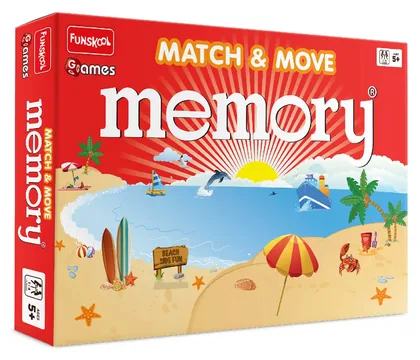
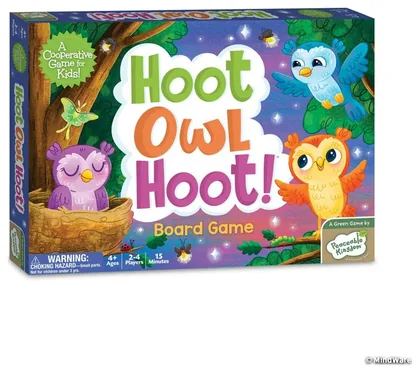
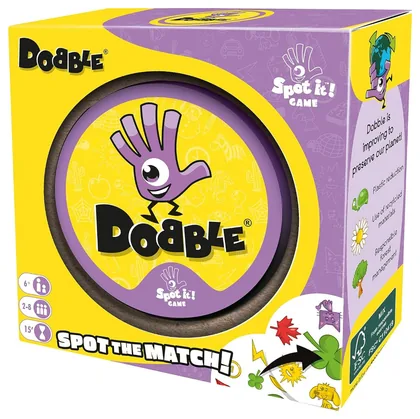
| Why look at it | This page | A made-in-India memory board game for the next step up, from about 5 | A gentle colour game for young children where everyone plays as a team | Spot-the-match pictures for when children want something faster |

Questions people ask about Memory Chess
How do you play memory chess?
Roll the colour die and pull out one peg. If its hidden colour matches the die, keep it; if not, show it to everyone and put it back in the same hole. When the board is empty, whoever has the most pegs wins.
Is memory chess the same as chess?
No. Memory chess is a colour-memory toy for young children and has nothing to do with real chess apart from the name: there are no kings, knights or checkmate. If your child is ready for real chess, see our chess page.
What age is memory chess for?
Most sets say 3 and up, and it works best from about 3 to 7. Older children and adults can play too, but for them it's mostly a quick warm-up. Keep the small pegs and the die away from children under 3.
Does a memory chess toy need an ISI mark in India?
Yes. Under the Toys (Quality Control) Order, in force since 1 January 2021, toys sold in India must meet Indian safety standards and carry the ISI mark under a licence from the Bureau of Indian Standards. Look for the mark and a licence number on the box.
How many players can play memory chess?
Two to four is best, though more can join because 24 pegs go a long way. A child can also play alone by naming a colour before pulling each peg.
Game facts
- Publisher
- Toy Imagine (maker not identified)
- Players
- 2–4
- Language
- No reading – Nothing to read: the colours do all the work, so it suits children who can't read yet and grandparents who prefer to explain games in Hindi or another language. The rules leaflet in these sets is usually a short sheet in English.
Sources & photo creditsThe references behind this guide.
Facts on this page come from the publisher, the Indian maker or distributor, and the sources below. Photos are credited under each one.
- Clapjoy - Wooden Memory Chess & Tic Tac Toe (Combo): contents (24 coloured pegs)
- Toycra - Simarr Toys Wooden Memory Chess Game (wooden dice, sticks and round base)
- FirstCry - Play Nation Wooden Memory Matchstick Chess Game Set (pegs and dice)
- Rokomari - Nini Toys Wooden Memory Chess Game (24 pegs, colour die, 17 cm board; FAQ with the basic rule)
- Bureau of Indian Standards - Indian Standards on toys (Toys QCO, ISI mark)