






Traditional game
Ludo
India's favourite race game: roll a six, cut and race home
Roll and moveDice rollingPure luck
- 2–4best with 4
- 30–60 minper game
- About 2 minto set up
- 5+years
- Very easy
- Nonereading
A well-made set, on Amazon.in
Many brands make this game. We picked one well-made set; check its size and pieces in the listing before you buy.
Paid link. We may earn a commission, at no extra cost to you.
The game in a nutshell
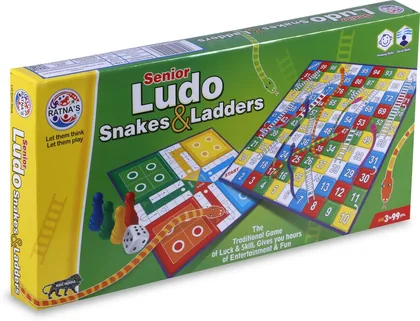
Ludo is the dice race game almost every Indian home has: each player tries to move four counters out of their corner, once round the board and into home before anyone else. It grew out of India's much older Pachisi and Chaupar, takes five minutes to teach, and suits everyone from about 5 up to grandparents. Our link goes to Ratna's Senior 2-in-1 set, a dual-sided board with Ludo on one side and Snakes and Ladders on the other.
Is Ludo right for you?
Great if
- Family get-togethers and Diwali holidays, when three generations want one game everyone already knows
- Children from about 5 who can count the dots on a die and are ready for a little choice and a lot of drama
- Playing in pairs: partners sit opposite each other and help each other home, as in the old Pachisi
- Rainy afternoons and power cuts: no batteries, no reading and no screen
Skip it if
- You want a game where planning beats luck; the die decides most of what happens
- Someone in the family takes being sent back to the start very badly; capturing is the heart of the game
- You mostly play with two; it works, but it's at its liveliest with four
How Ludo plays
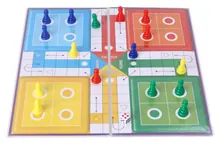
Set-up: each player picks a colour and puts four counters in the matching corner, the yard. The track runs round the cross-shaped board, and each colour has its own lane up the middle of its arm, leading to the home triangle in the centre.
- Time to teach: about 5 minutes.
- Reading and language: Nothing to read during play. The rules are usually passed on by word of mouth, so it works in Hindi, Tamil, English or any mix; only the rules leaflet is printed.

Ludo Board Game Rules & Instructions | Learn How To Play Ludo Game · Mr.Animate
Choose a video · Watch right here
If this creator doesn’t allow embedded playback, watch on YouTube ↗.
Your turn, step by step
- 1Roll
Roll the die. A six brings a counter out of your yard and gives you another roll; otherwise move one of your counters forward by the number shown.
- 2Capture
Land exactly on an opponent's counter to send it back to its yard. Star squares and starting squares are usually safe.
- 3Home
Turn each counter up your own coloured lane and into the centre, usually with an exact throw. The first to get all four counters home wins.
The full explanation: how a game of Ludo goes
On your turn, roll one die. You need a six to bring a counter out of the yard onto your starting square, and a six also gives you another roll. Otherwise, move any one of your counters on the board forward by the number shown. Once you have several counters out, choosing which one to move is where the thinking comes in.
Land exactly on an opponent's counter and you capture it ('cut' or 'kill' it, as many Indian families say), sending it back to its yard; it needs another six to come out. Most boards sold in India mark star squares that are safe, and starting squares are usually safe too. Two counters of one colour on the same square form a block that many families treat as uncapturable.
After going nearly all the way round, each counter turns into its own colour's lane, where no one else can touch it. Standard rules need an exact throw to get a counter into home. The first player with all four counters home wins, and the rest often play on for second and third place.
House rules differ from home to home, so agree them before the first throw: three sixes in a row usually cancels the turn; many families give an extra roll for a capture or for getting a counter home; some insist you must capture at least once before any counter may go home. A four-player game typically takes 30 to 60 minutes.
What's in the box
- 1Playing board
dual-sided: Ludo on one side, Snakes and Ladders on the other - 16Counters
4 each in 4 colours, going by an Indian listing for Ratna's Senior Deluxe set - –Die
not listed for this set; most Ludo sets have one
Box: 37 × 18.5 × 4 cm. Handy to know for gifting and travel.
Ratna's doesn't publish a contents list we could read. The dual-sided board comes from the listing title. The 16 counters come from an Indian marketplace listing for Ratna's 'Ludo with Snakes & Ladders Senior Deluxe' (item 1256), which may be the same set. For comparison, Funskool's 2-in-1 rules sheet lists a board, one die and 16 pawns in four colours. Check the box for the die before the first game.
Where to buy
A well-made set, on Amazon.in
Many brands make this game. We picked one well-made set; check its size and pieces in the listing before you buy.
Opens Amazon.in in a new tab.
Nobody owns Ludo, so choose a well-made set rather than a brand. Our Amazon.in button goes to Ratna's Senior 2-in-1 set, from a Mumbai toy maker; Indian listings give India as the country of origin for Ratna's Ludo and Business sets. Imported or premium wooden sets can look smarter, but they play exactly the same game.
How to pick a good setWhat to check in the listing before you buy.
- Board: a folding board of roughly 30-40 cm across is comfortable for four. Thick, laminated card resists bending and wipes clean after spilt chai; wooden boards last longest; magnetic boards keep counters in place on journeys and with small children.
- Counters: you need four per colour (16 for a four-player board, 24 for a six-player board), in colours that are easy to tell apart and with flat, stable bases. Check the count on the box, because spares go missing fast.
- Dice: one well-made die with clear dots and rounded corners. A dice cup, or a rule that the die must land on the board, stops arguments over 'special throws'. Keep a spare die in the box.
- Print: squares should be big enough for two counters (for blocks), with clear star safe squares, starting squares and home lanes in each colour. Smudged or misaligned printing is a sign of a poor set.
- Safety: look for the ISI mark and a BIS licence number (CM/L- followed by digits) on the box. Under India's Toys (Quality Control) Order, toys sold in India must carry it since 1 January 2021. Counters and dice are small, so keep them from toddlers.
- Storage: a box or tray that holds the counters and die; loose counters disappear within weeks.
- Extras: decide whether you want Snakes and Ladders on the back (as in the set we link) or a six-player board for large families.
We link to one well-made set from a maker we could identify; other good sets exist. We don't show prices: Amazon shows today's price, the seller and delivery. Paid link. We may earn a commission, at no extra cost to you.
What reviewers and players say
Ludo has no reviewers in the usual sense: it's a centuries-old family game most Indians learn from cousins and grandparents rather than from a rule book. What families value is that anyone can join, there's nothing to read, and captures bring big swings and loud laughter. The usual gripes are that the die decides most things, that waiting for a six can leave a player stuck for several turns, and that four-player games run long. Most arguments come from house rules, so agree them before the first throw.
What people love
- Everyone from 5 to 85 can play together, in any language
- Captures and comebacks keep it loud and lively
- Playing in partnerships gives older players a reason to plan
- No batteries or screen, and a sturdy set lasts for years
Common complaints
- Waiting several turns for a six can leave a player out of the action
- It's mostly luck, so some adults find it slow
- Four-player games can run long, and house-rule arguments are common
Based on 5 reviews and discussions
- Reference Ludo · Wikipedia
- Reference Pachisi · Wikipedia
- Reference Chaupar · Wikipedia
- Reference 2 in 1 Classics instruction sheet (Funskool, item 9410100) · Funskool
- Reference Ludo Board Game Rules & Instructions (Mr.Animate) · YouTube
Summarised in our own words from the sources above. We don't use Amazon reviews or ratings.
More like Ludo
Our picks if Ludo isn't quite right
| Feature |
 Ludo
Ludo |
 Snakes and Ladders
 |
 Carrom
 |
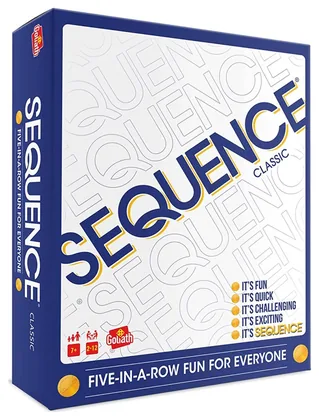 Sequence
 |
|---|---|---|---|---|
| Players | 2–4 | 2–4 | 2–4 | 2–12 |
| Best with | 4 | 2-4 | 2 or 4 | 4-6 in two teams |
| Play time | 30–60 min | 15–30 min | 15–60 min | 20–40 min |
| Age | 5+ | 4+ | 8+ | 7+ |
| Rules | Easy | Easy | Easy | Easy |
| Indian edition | Yes | Yes | Yes | Yes |
| Why look at it | This page | The other side of the same 2-in-1 board, and pure luck for younger children | The other classic every Indian home plays, with skill instead of dice | A family game that also works in teams, with a little more planning |
More from Ratna's
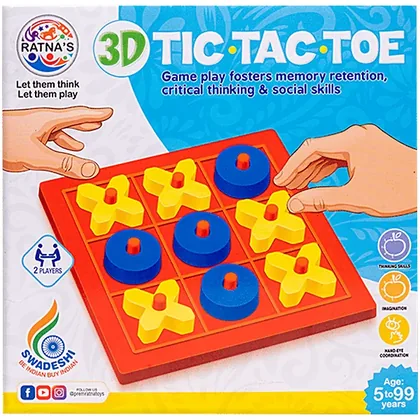
More roll-and-move games
See allSnakes and Ladders
Climb the ladders, dodge the snakes, first to 100 wins

Business
India's own property game: buy cities, collect rent, build hotels

Monopoly
Roll, buy property, collect rent, and bankrupt everyone else

Cluedo
Work out who did it, where, and with which weapon

The Game of Life
Spin through college, jobs, family and retirement; richest player wins
Better with just two players
Snakes and Ladders
Climb the ladders, dodge the snakes, first to 100 wins
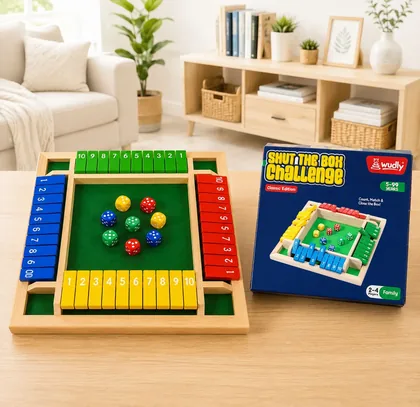
Shut the Box
Roll two dice, flip down the tiles, leave the smallest total
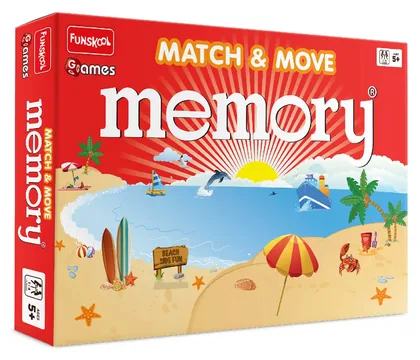
Match & Move Memory
Remember where each picture hides and race your piece home
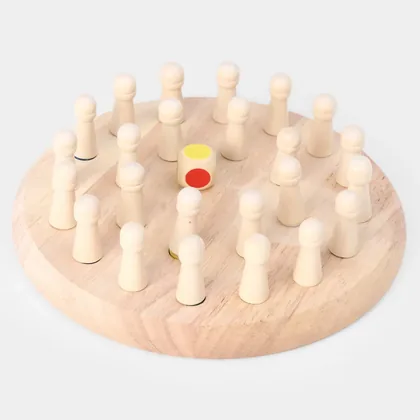
Memory Chess
Remember where the colours hide and pull out the right peg

Wingspan
Calm card game about birds where every new bird boosts your turns.
Questions people ask about Ludo
Do you need a six to start in Ludo?
Yes. In the standard rules a counter can only leave its yard on a six, and the six also gives you another roll. Some families let a one bring a counter out too, to speed things up with small children; agree on it before the first throw.
What happens if you roll three sixes in a row in Ludo?
In most homes the third six cancels the turn: you don't move for it, and in some families you also undo the moves from the first two sixes. It stops one lucky player racing away. It's a house rule, so settle it before you start.
Which squares are safe in Ludo?
On most boards sold in India, the squares marked with a star and each colour's starting square are safe, so a counter there can't be captured. Your own coloured lane leading home is safe too, because no one else can enter it. On plain boards without stars, families usually treat just the starting squares as safe.
Is Ludo an Indian game?
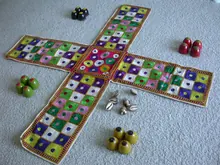
Its roots are. Ludo is a simplified version of India's Pachisi and Chaupar, cross-shaped race games played for centuries on cloth boards with cowrie shells or long dice. The simpler version was patented in England as Ludo in 1896; the name is Latin for 'I play'.
Can 6 people play Ludo?
Not on a standard board, which has four colours. Six-player boards have six arms and six sets of counters; Funskool, for example, makes a Ludo for 2 to 6 players. The Ratna's set we link has a four-colour board.
Game facts
- Publisher
- Ratna's (Prem Ratna Toys, Mumbai)
- In India
- Prem Ratna Toys, Mumbai (maker of Ratna's games)
- Players
- 2–4
- Language
- No reading – Nothing to read during play. The rules are usually passed on by word of mouth, so it works in Hindi, Tamil, English or any mix; only the rules leaflet is printed.
- Box size and weight
- 37 × 18.5 × 4 cm
Sources & photo creditsThe references behind this guide.
Facts on this page come from the publisher, the Indian maker or distributor, and the sources below. Photos are credited under each one.
- Ludo - Wikipedia
- Pachisi - Wikipedia
- Chaupar - Wikipedia
- Funskool - 2 in 1 Classics instruction sheet (item 9410100)
- Funskool - Ludo (6-player, item 9416100)
- Toycra - Ratna's Shut The Box (maker details for Ratna's: Prem Ratna Toys, Mumbai)
- Flipkart - Ratnas Ludo with Snakes & Ladders Senior Deluxe (1256)
- Bureau of Indian Standards - Indian Standards on Toys: ensuring your child's safety (April 2023)