


Card game
Sushi Go!
Pick a dish, pass the rest, build the best sushi meal
- 2–5best with 3-5
- 15–20 minper game
- About 2 minto set up
- 8+years
- Easy
- Littlereading
The official edition, on Amazon.in
There's no Indian edition, so this is the official imported game. Amazon shows today's price, the seller and delivery.
Paid link. We may earn a commission, at no extra cost to you.
The game in a nutshell
Sushi Go! is a quick card game for 2 to 5 players aged 8 and up: everyone picks one card from their hand, passes the rest along, and tries to build the best-scoring plate of sushi over three rounds. It suits families and friends who want something a step more thoughtful than UNO but still learnable in five minutes, and a game lasts about 15–20 minutes. There's no Indian edition, so every genuine copy is an import.
Is Sushi Go! right for you?
Great if
- Families with children of 8 and up who are ready for a little planning
- A 20-minute game before dinner or between longer games on a festival night
- Groups of 3 to 5, since everyone picks at the same time and nobody waits for a turn
- Rummy fans who enjoy collecting sets and want a fresh twist
Skip it if
- You often have 6 or more players. Sushi Go Party! takes up to 8
- You want an Indian edition: there isn't one, so every genuine copy is an import
- Nobody in your group wants to add up scores with pen and paper after every round
A place on the honours list
Good company to be in.
Recognition from beyond our table.
Boardgames Australia Awards, Best Australian Game, 2015 (Winner)
UK Games Expo Awards, Best General Card Game, 2015 (Winner)
How Sushi Go! plays
Shuffle the 108 cards and deal a hand to everyone: 10 cards each with two players, 9 with three, 8 with four and 7 with five. Everyone secretly chooses one card to keep and places it face down. All players reveal their choices together, then pass the rest of their hand to the left. You pick again from a slightly smaller hand, and this carries on until every card has been taken.
- Time to teach: about 5 minutes.
- Reading and language: Each card has a short English label with its scoring printed on it, such as 'Wasabi: next nigiri x3' or the dumpling scale 1-3-6-10-15, so once the rules are explained you mostly read numbers. You don't need to know anything about sushi. Someone has to keep score with pen and paper after each round.

How to play Sushi Go - Games Explained · Games Explained
Choose a video · Watch right here
If this creator doesn’t allow embedded playback, watch on YouTube ↗.
Your turn, step by step
- 1Pick
Everyone looks at their hand and secretly chooses one card to keep, placing it face down. When all are ready, the chosen cards are turned over together.
- 2Pass
Pass the rest of your hand to the player on your left and pick again from the smaller hand you receive. Keep going until every card has been taken.
- 3Score
Add up your plate: pairs of tempura, sets of three sashimi, dumplings, nigiri (tripled on wasabi) and the race for the most maki rolls. Puddings stay in front of you until the end of the game.
- 4Win
After three rounds, the most puddings gains 6 points and the fewest loses 6. The highest total wins, and a tie goes to the player with more puddings.
The full explanation: how a game of Sushi Go! goes
The cards you keep score in different ways. Two tempura are worth 5 points, and three sashimi are worth 10. Dumplings get better the more you have, scoring 1, 3, 6, 10 or 15. Egg, salmon and squid nigiri score 1, 2 and 3, but a nigiri placed on a wasabi card scores triple. Maki rolls are a race: the player with the most maki icons scores 6, and second place scores 3.
Two cards bend the rules. If you have chopsticks in front of you, on a later turn you can take two cards from the hand you are holding and then hand the chopsticks back in that hand. Pudding is dessert and stays in front of you until the very end. Whoever has the most puddings gains 6 points, and whoever has the fewest loses 6, except in a two-player game, where nobody loses points.
Because hands keep moving around the table, you are always weighing what you need against what the next player wants. Sometimes the best move is to take a card just so your neighbour can't finish a set. After three rounds, the highest score wins, and if there is a tie, the player with more puddings wins.
What's in the box
- 14Tempura cards
a pair scores 5 points - 14Sashimi cards
a set of three scores 10 points - 14Dumpling cards
1, 3, 6, 10 or 15 points for one to five or more - 26Maki roll cards
6 with one roll, 12 with two rolls and 8 with three rolls - 20Nigiri cards
10 salmon, 5 squid and 5 egg - 10Pudding cards
scored only at the end of the game - 6Wasabi cards
triples the next nigiri you take - 4Chopsticks cards
let you take two cards on a later turn - 1Rules leaflet
- 1Tin
small storage tin, about 14 x 10 x 4 cm
Box: 14.3 × 10.2 × 3.8 cm, 0.27 kg. Handy to know for gifting and travel.
Card counts are from Gamewright's rules leaflet for its 108-card edition (stock #249). Gamewright's product page lists only '108 cards'; the tin is from retailer descriptions and Gamewright's item size. The Zoch Verlag edition, also sold in India, is the same 108-card game, but its packaging and rules languages were not checked. There is no score pad, so keep a pen and paper handy.
Where to buy
The official edition, on Amazon.in
There's no Indian edition, so this is the official imported game. Amazon shows today's price, the seller and delivery.
Opens Amazon.in in a new tab.
There is no Indian edition, and we found no Indian distributor, so every genuine copy is an import. Gamewright's tin and the Zoch Verlag edition are the same 108-card game. Our Amazon.in link goes to Gamewright's edition, an import.
How to make sure you get a genuine copyA little care before you click.
- Look for the Gamewright name on the tin, or Zoch for the European edition. Listings titled 'Sushi Go Family Board Game' under unrelated brand names are not from the publisher.
- Be wary of a tin that costs a fraction of the usual price; much cheaper look-alikes sold under the name come from other makers.
- Check the packaging. Gamewright's Sushi Go! comes in a small metal tin (about 4 × 5.6 inches), and Sushi Go Party! comes in a larger box with a board and 8 wooden pawns.
- Count the 108 cards: 14 tempura, 14 sashimi, 14 dumpling, 12 two-maki, 8 three-maki, 6 one-maki, 10 salmon nigiri, 5 squid nigiri, 5 egg nigiri, 10 pudding, 6 wasabi and 4 chopsticks.
- Be wary of a cheap 'Sushi Go Party! Deluxe'. Check the brand and the seller, and compare the listing with Gamewright's own Party listing.
We link to one Amazon.in listing that we've checked against the maker's own information. We don't show prices: Amazon shows today's price, the seller and delivery. Paid link. We may earn a commission, at no extra cost to you.
What reviewers and players say
Reviewers agree Sushi Go! is one of the easiest ways into 'pick and pass' card games. It is quick to teach, over in about 15 to 20 minutes, and cute enough that children and non-gamers want to play. Most say it is best with three to five players and only fair with two, even with the dummy-hand variant. Experienced gamers may find it too light for a whole evening, but it is widely recommended as an opener or a game to play between bigger ones.
What people love
- Simple rules that new players pick up within one round
- Short games, so it's easy to play two or three in a row
- Bright, cheerful sushi art with smiling faces on the cards
- Chopsticks and wasabi add small but satisfying decisions
Common complaints
- Weaker with two players, because passing hands between only two people loses much of the fun
- Scoring needs pen and paper, and there are no reference cards to remind players what each dish is worth
- Too light for players who want deep strategy, and the thin cards may wear with heavy shuffling
Based on 7 reviews and discussions
- Review Sushi Go Card Game Review (Tony Mastrangeli, July 2014) · Board Game Quest
- Review Order Up: A Review of Sushi Go! (Naomi Laeuchli, March 2017) · Casual Game Revolution
- Review Review: Sushi Go! (Jonathan Franklin, September 2013) · The Opinionated Gamers
- Video Sushi Go! Review - with Tom Vasel (Tom Vasel, 2014) · The Dice Tower
- Players Wasabi In Sushi Go (Board & Card Games Stack Exchange, January 2022) · Board & Card Games Stack Exchange
- Award Sushi Go! (designer's page listing awards) · Phil Walker-Harding
- Reference Sushi Go! · Wikipedia
Summarised in our own words from the sources above. We don't use Amazon reviews or ratings.
More like Sushi Go!
Our picks if Sushi Go! isn't quite right
| Feature |
 Sushi Go!
 |
 7 Wonders
 |
 Azul
Azul |
 Splendor
 |
|---|---|---|---|---|
| Players | 2–5 | 3–7 | 2–4 | 2–4 |
| Best with | 3-5 | 4-7 | 2-4 | 2-3 |
| Play time | 15–20 min | 30 min | 30–45 min | 30 min |
| Age | 8+ | 10+ | 8+ | 10+ |
| Rules | Easy | Medium | Easy | Easy |
| Indian edition | Import | Import | Yes | Import |
| Why look at it | This page | Uses the same pick-and-pass idea in a longer, deeper game about building a civilisation | A similar step up from family card games, with drafting tiles instead of cards | Another quick set-collection game for 2 to 4 players, with a bit more long-term planning |
More from Gamewright

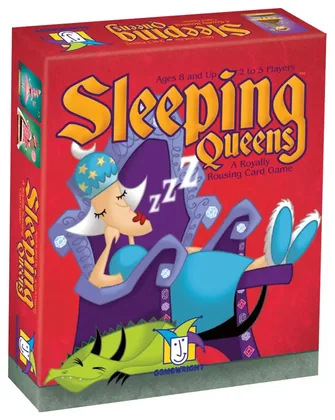
More pick-and-pass games
See all7 Wonders
Build an ancient city by picking one card and passing the rest.

7 Wonders Duel
The 7 Wonders civilisation race, rebuilt as a tense 30-minute duel
Azul
Draft colourful tiles and build the best-scoring palace wall
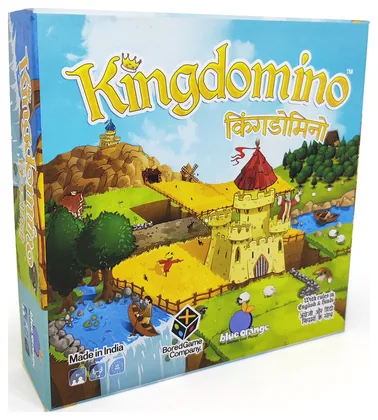
Kingdomino
Build a tiny kingdom from land dominoes in twenty minutes
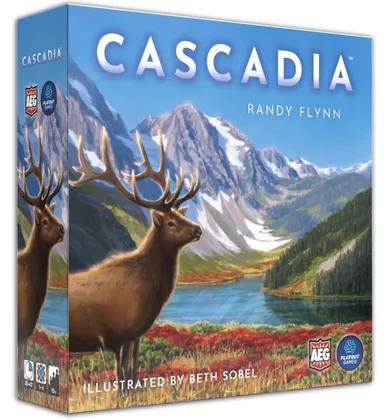
Cascadia
Build a Pacific Northwest landscape and fill it with wildlife
Better with just two players
7 Wonders Duel
The 7 Wonders civilisation race, rebuilt as a tense 30-minute duel
Splendor
A quick gem-trading race where every card makes the next easier.
Azul
Draft colourful tiles and build the best-scoring palace wall

Jaipur
Two rival merchants trade goods and camels in old Jaipur
Kingdomino
Build a tiny kingdom from land dominoes in twenty minutes
Also worth a look (not in our catalogue yet): Sushi Go Party! – The same game for up to 8 players, with a different menu of dishes each time.
Questions people ask about Sushi Go!
Is Sushi Go available in India?
Yes, but only as an import, because there is no Indian edition. Gamewright's 108-card tin and the Zoch Verlag edition are the same game. Our Buy on Amazon.in button goes to the listing we've checked; make sure the brand is Gamewright.
Can you play Sushi Go with 2 players?
Yes. The game supports 2 to 5 players, and with two you each get 10 cards. The rulebook also has an optional two-player variant in which you take turns controlling a third 'dummy' hand, which makes the passing feel more like a bigger game.
Should I buy Sushi Go or Sushi Go Party!?
Sushi Go! is the small tin for 2 to 5 players, with a fixed set of dishes. Sushi Go Party! takes 2 to 8 players and lets you choose a different menu from more than 20 dishes each game, but the box is bigger and it costs more.
What age is Sushi Go suitable for?
Gamewright says 8 and up. The picking and passing is simple, but players add up points after each round, so younger children can join in if an adult keeps score.
Game facts
- Designed by
- Phil Walker-Harding
- Publisher
- Gamewright (self-published by the designer in 2013; Gamewright edition from 2014)
- First published
- 2013
- Players
- 2–5
- Barcode
- 0759751002497
- Language
- Little reading – Each card has a short English label with its scoring printed on it, such as 'Wasabi: next nigiri x3' or the dumpling scale 1-3-6-10-15, so once the rules are explained you mostly read numbers. You don't need to know anything about sushi. Someone has to keep score with pen and paper after each round.
- Box size and weight
- 14.3 × 10.2 × 3.8 cm, 0.27 kg
- Awards
- Boardgames Australia Awards, Best Australian Game, 2015 (Winner); UK Games Expo Awards, Best General Card Game, 2015 (Winner)
Sources & photo creditsThe references behind this guide.
Facts on this page come from the publisher, the Indian maker or distributor, and the sources below. Photos are credited under each one.
- Sushi Go! – Gamewright (publisher page)
- Sushi Go! rules of play – Gamewright (PDF)
- Sushi Go Party! – Gamewright (publisher page)
- Sushi Go! – Phil Walker-Harding (designer page)
- Sushi Go! – Wikipedia
- Sushi Go! (Zoch Verlag) – Board Games India
- Sushi Go (Zoch Verlag Edition) – Gameistry
- Sushi Go (Gamewright Edition) – Gameistry